Go back to list of posts
EDUCAUSE 2026: Dates, Location & Networking Guide
Last modified: September 4, 2026


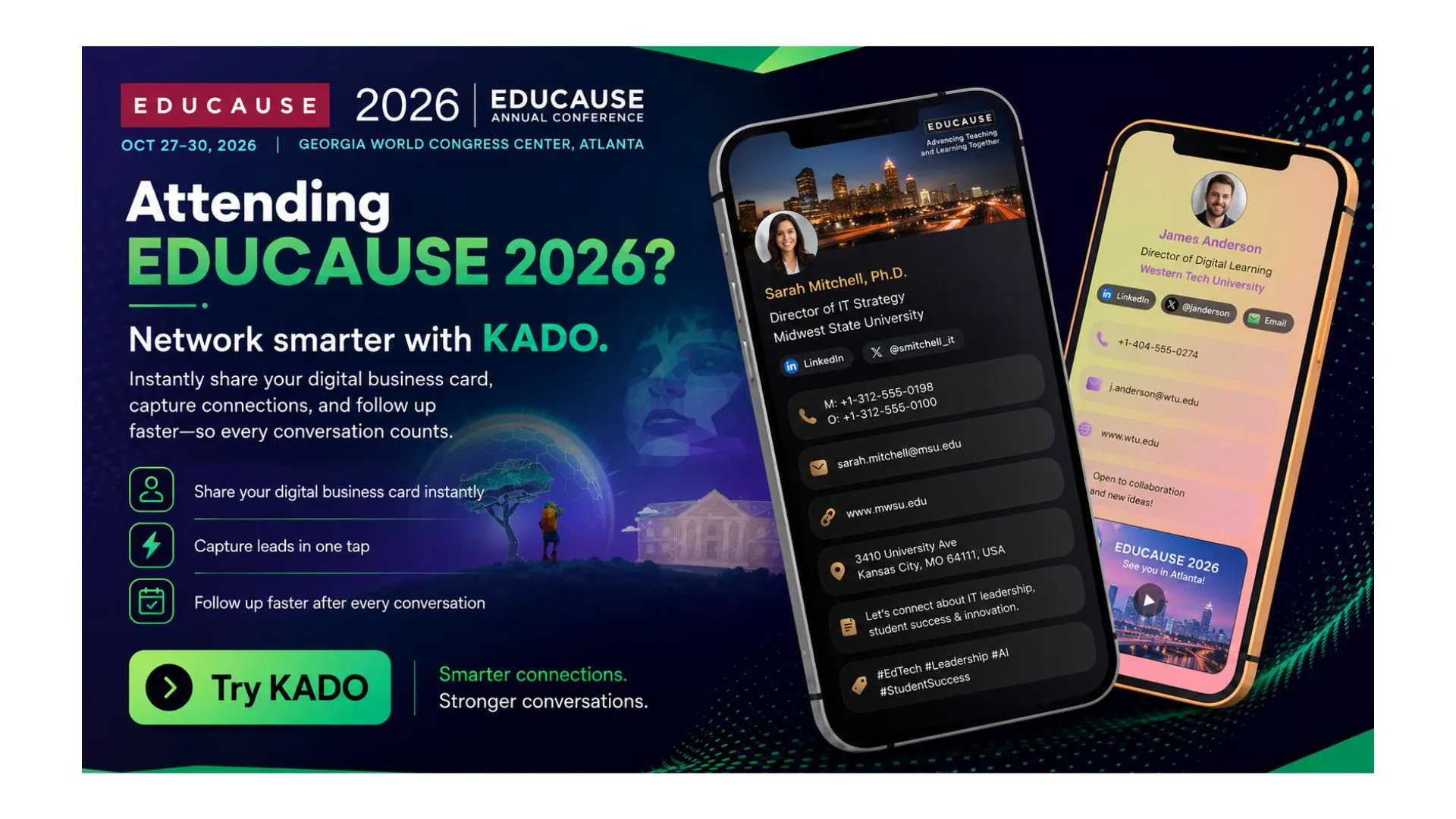
If you're planning to attend EDUCAUSE 2026, you're heading to the largest annual gathering of higher education technology professionals in the world. EDUCAUSE 2026 takes place September 29–October 2 at the Colorado Convention Center in Denver, followed by an online-only component October 14–15, and it draws thousands of IT leaders, faculty, and technology providers from colleges and universities across the globe. Whether this is your first EDUCAUSE or your tenth, showing up prepared makes the difference between a packed calendar of small talk and a trip that actually moves your institution's technology strategy forward.
This guide covers what EDUCAUSE 2026 is, who attends, what to expect from the agenda, and — most importantly — how to network at EDUCAUSE in a way that leads to real follow-up after the event ends.

What Is EDUCAUSE?
EDUCAUSE is a nonprofit association for higher education technology professionals, and its Annual Conference is the organization's flagship event. According to EDUCAUSE, the conference connects "the best thinkers in higher education technology" — professionals and technology providers who gather to network, share ideas, grow professionally, and discover solutions to challenges specific to college and university IT.
Unlike a vendor-run trade show, EDUCAUSE is member-organized: the conference's programming is informed, planned, and shaped by EDUCAUSE members through an advisory committee, which keeps the agenda grounded in the real problems higher ed IT teams are working through, rather than a purely vendor-driven sales pitch. The event combines keynote general sessions, breakout content, an exhibit hall, and a set of dedicated "Experiences" aimed at specific career stages and leadership levels.
EDUCAUSE 2026 Dates and Location
EDUCAUSE 2026 runs September 29–October 2, 2026, in-person at the Colorado Convention Center in Denver, CO, with an additional online conference on October 14–15, 2026. In-person attendees automatically gain access to the online conference as part of their registration, or you can register for the online-only event separately if you can't travel.
The in-person conference begins on September 29 with preconference programming, which requires separate registration from the main conference pass. Key registration dates to know:
- Early June — Registration opens
- July 28 — Early Bird registration deadline (lowest rates)
- September 2 — Advance registration deadline
- September 29 — Conference begins with preconference programming
Registration pricing varies by EDUCAUSE membership status and registration date, so check the official registration page for current rates before booking.

Who EDUCAUSE 2026 Is Designed For
EDUCAUSE draws a mix of roles across higher education technology, which is part of what makes it useful for networking. You'll find people from:
- Institution types — public and private colleges and universities, community colleges, and university systems of all sizes
- Job titles — CIOs and senior technology leaders, IT directors and managers, cybersecurity and privacy professionals, teaching and learning technologists, data and analytics leaders, and institutional presidents and senior executives
- Career stages — EDUCAUSE runs a dedicated Young and Early Career Professionals Experience alongside an Executive Leaders Experience, so the event has structured content whether you're new to higher ed IT or running a large technology organization
- Technology providers — corporate members and sponsors ranging from major platforms like Microsoft, Salesforce, AWS, and Oracle to specialized higher-ed vendors like Ellucian, Jenzabar, and Pathify
If you're weighing whether to attend, the fact that the conference agenda is member-organized rather than purely vendor-driven is worth noting: sessions tend to reflect real institutional priorities like AI adoption, cybersecurity culture, and legacy system costs, rather than a straight product pitch.

Main Topics and Themes at EDUCAUSE 2026
EDUCAUSE's programming each year is shaped by the EDUCAUSE Top 10, an annual list of the most pressing technology issues in higher education, compiled from a member survey. For 2026, several themes run through the agenda:
| Main Topics and Themes at EDUCAUSE 2026 | Details |
|---|---|
Artificial Intelligence | Framed around empowering people, not just deploying algorithms — sessions focus on helping students, faculty, and staff engage with AI tools critically, creatively, and safely across the institution. |
Cybersecurity as Shared Responsibility | The 2026 framing shifts from pure technical defense to institution-wide culture, with sessions on awareness, training, and cross-campus collaboration rather than treating security as solely an IT problem. |
Digital Transformation & Legacy Systems | Sessions address cost, ROI, and legacy system assessment — a recurring priority as institutions weigh modernization against budget constraints. |
Student Success & Analytics | Content on using data and analytics to support student outcomes and institutional decision-making. |
Leadership & Career Development | Delivered through dedicated Experiences for early-career professionals, executive leaders, and career coaching, rather than folded into general sessions. |
Confirmed Speakers at EDUCAUSE 2026
EDUCAUSE 2026 has confirmed its general session presenters for both the in-person and online components:
- Heather McGowan — Future of Work Strategist, Speaker, and Best-Selling Author (Denver general session)
- Paul LeBlanc — Owner, After the Hurricane; former college president (Denver general session)
- Adam Grant — Organizational psychologist and #1 New York Times bestselling author (Online general session)
The conference also features a dedicated session unpacking the 2026 EDUCAUSE Top 10, presented by the panel of members who compile the annual list. Because breakout session speakers are added on a rolling basis as the schedule fills in, it's worth checking the official schedule at-a-glance closer to the event date for the most current lineup.
Key Sessions and Experiences to Look Out For
Beyond the main general sessions, EDUCAUSE runs several dedicated "Experiences" worth building into your schedule:
- EDUCAUSE Commons — A central gathering space for networking and informal conversation on the show floor
- EDUCAUSE Leadership Series — Sessions aimed at developing leadership skills specific to higher ed technology roles
- Teaching and Learning Summit — Focused programming for instructional technology and pedagogy professionals
- Executive Leaders Experience — Content and networking built specifically for senior technology leaders and CIOs
- Young and Early Career Professionals Experience — Structured networking and development content for people newer to the field
- Executive Career Coaching — One-on-one coaching sessions available to conference attendees
- Preconference Workshops — Hands-on programming on September 29, before the main conference opens (requires separate registration)
How to Prepare Before EDUCAUSE 2026
Good preparation starts weeks before you land in Denver, not the night before.
1. Choose Your Track Strategy
With general sessions, breakout content, and multiple dedicated Experiences running throughout the conference, you can't attend everything. Review the schedule at-a-glance ahead of time and decide whether your priority is the Executive Leaders Experience, the Teaching and Learning Summit, or general breakout sessions organized around your institutional priorities.
2. Set Specific Goals
"Networking" is too vague a goal to act on. Instead, decide what you actually want from the trip: three peer conversations about a specific technology challenge, a new vendor relationship, or a handful of contacts at institutions similar to yours. Specific goals shape how you spend your time on the floor.
3. Research Speakers and Sponsors in Advance
Look through the confirmed speakers and the Mission Partner and Strategic Partner sponsor lists before you arrive. If there's a specific vendor or peer institution you want to meet, plan around their session or booth location rather than hoping to run into them.
4. Prepare Your Materials
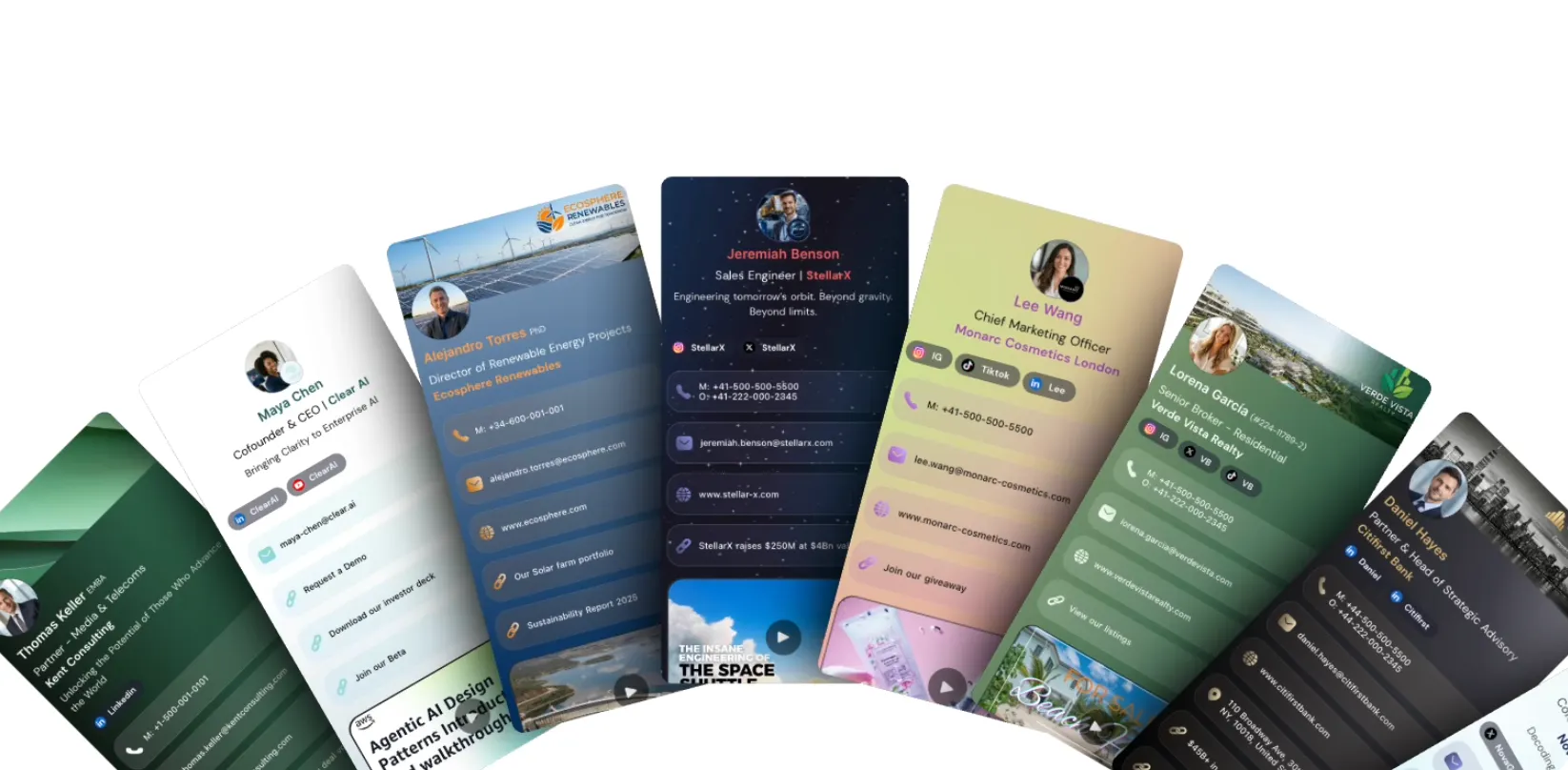
This includes your questions for specific sessions and how you'll exchange contact details. Paper business cards are still common at large conferences, but they're easy to lose in a stack after four days of meetings. Many attendees now bring a digital business card instead, sharing their details through a QR code or link that the other person can save instantly on their phone — no app download required.
This guide on what to bring to a networking event is a useful checklist if you want to make sure you're not forgetting anything logistical before you pack.
Practical Tips for Making the Most of EDUCAUSE 2026
| Tips | Details |
|---|---|
Register for preconference workshops early. | Preconference programming on September 29 requires separate registration and tends to fill up, especially hands-on sessions. |
Block time between sessions. | Back-to-back sessions leave no room for the hallway conversations that often matter more than the talks themselves. |
Use the EDUCAUSE app. | Download the conference app before you arrive so you can build a personal schedule and see session details in one place. |
Don't skip the dedicated Experiences. | The Executive Leaders Experience and Young and Early Career Professionals Experience tend to produce more focused conversations than general sessions alone. |
Pace yourself. | A four-day conference with general sessions, breakouts, and evening networking is a lot. Build in downtime so you're sharp for the meetings that matter most. |
Networking at EDUCAUSE: Before, During, and After
Networking at EDUCAUSE works best when you treat it as a three-stage process, not something that only happens on the show floor.
Before the Event
Use LinkedIn or the EDUCAUSE member directory to identify a shortlist of people you want to meet — speakers, peer institutions, or vendors you're evaluating. A short, specific message beforehand ("I'll be at the Teaching and Learning Summit, would love to connect after") gets a far better response than a cold introduction on-site.
If you're new to writing that kind of message, this guide on crafting an elevator pitch can help you get to the point quickly, both in outreach messages and in person.
During the Event
At a conference this size, speed matters. When you meet someone worth staying in touch with, you want to capture their information without slowing down the conversation. This is where a lot of professionals lean on a digital business card like KADO: you share your card through a QR code or a tap, the other person gets your details instantly, and you can add a quick note about the conversation — like what session you met at or what you discussed — before you move on to the next conversation and forget the details.
Because your KADO card lives online rather than in a stack of paper, you can also update your title, institution, or contact info in real time if anything changes, and everyone you've shared it with automatically sees the current version.
After the Event
The follow-up window is short. Most industry advice points to reaching out within 48 hours, while the conversation is still fresh for both sides. If you collected contacts digitally throughout the event, you'll already have them organized by tag or note, which makes it much easier to send a relevant, specific follow-up instead of a generic "great meeting you" message.
For the actual outreach, these cold email templates are a solid starting point if you want your follow-up to sound personal rather than templated.
Watch how KADO's digital business card works!
Final Thoughts
EDUCAUSE 2026 brings together a genuinely broad mix of higher education technology leaders, from CIOs to early-career IT professionals to instructional technologists, across four days of sessions, dedicated Experiences, and networking events. Getting real value out of it comes down to preparation: picking the right sessions, setting clear goals, and having a system for capturing and following up on the people you meet.
The conversations you have on the show floor are only as useful as the follow-up that comes after. Show up ready to make the most of both.
If you want a faster way to exchange details at EDUCAUSE 2026, you can create a free KADO digital business card before you go, so you're ready to share your information and organize new contacts the moment you arrive.
Further Reading
Frequently Asked Questions
When is EDUCAUSE 2026?
EDUCAUSE 2026 runs September 29–October 2, 2026, in-person in Denver, CO, with an additional online-only conference October 14–15, 2026.
Where is EDUCAUSE 2026 held?
The in-person conference takes place at the Colorado Convention Center in Denver, CO.
Who should attend EDUCAUSE 2026?
EDUCAUSE is built for higher education technology professionals, including CIOs and senior technology leaders, IT directors, cybersecurity and privacy professionals, instructional technologists, and institutional executives, as well as technology providers serving the higher ed sector.
Do I need to register separately for preconference workshops?
Yes. The in-person conference begins September 29 with preconference programming that requires separate registration from the main conference pass.
What should I bring to EDUCAUSE 2026?
Beyond the basics, bring a way to exchange contact information quickly, since you'll likely meet dozens of new contacts across four days. Many attendees use a digital business card like KADO to make this faster than handing out paper cards.