Go back to list of posts
Why Use Branding Personalization to Drive Loyalty
Last modified: September 18, 2026


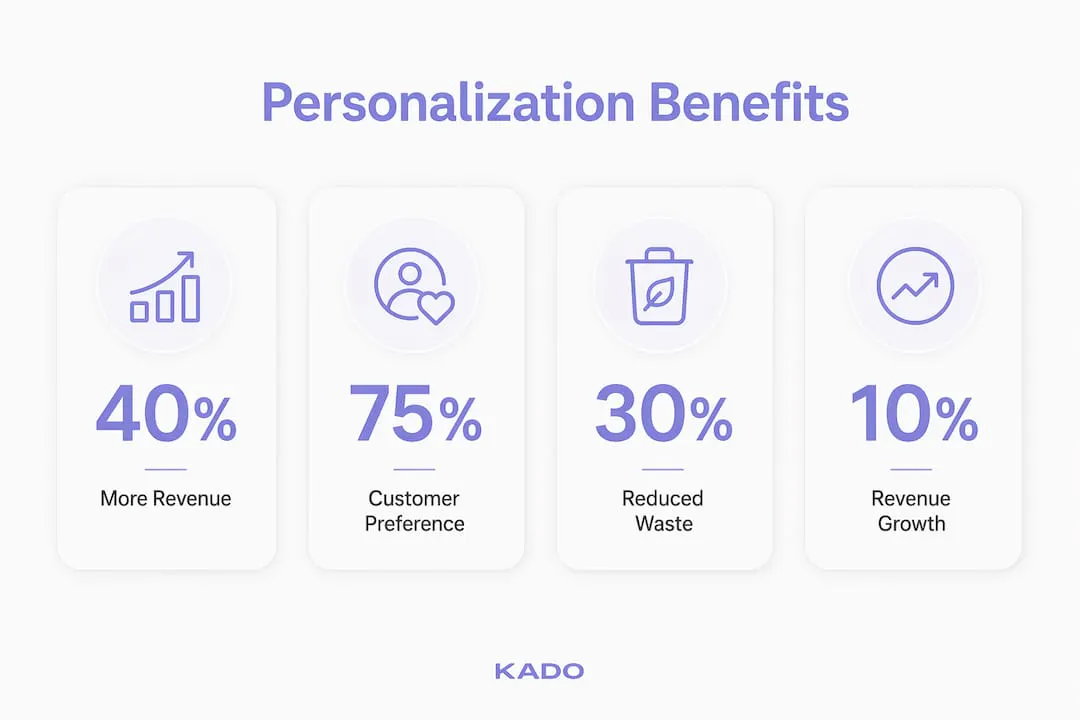
Branding personalization involves tailoring brand messages and experiences to individual customer preferences and behaviors. Companies that excel at personalization generate up to 40% more revenue and see faster growth than less personalized competitors. The main challenge lies in overcoming data silos and implementing real-time, behavior-based personalization across channels.
Branding personalization is defined as the strategic practice of tailoring brand messages, experiences, and touchpoints to individual customer preferences, behaviors, and lifecycle stages. The question of why use branding personalization has a direct answer: companies that excel at it generate up to 40% more revenue than less-personalized peers. Research from the BCG Personalization Index and Harvard Business Review confirms that personalization is no longer a differentiator. It is a baseline expectation. Brands like Emarsys have built entire platforms around this reality, and the gap between leaders and laggards is widening fast.
Why use branding personalization: the measurable business case
The revenue argument for personalized branding is concrete. Personalization leaders grow annual revenue roughly 10 percentage points faster than competitors who lag behind. That gap compounds over time, turning a short-term advantage into a structural one.
Consumer behavior data reinforces the urgency. Nearly 75% of consumers are significantly more likely to purchase from brands that personalize their experiences. This means three out of four buyers are actively rewarding brands that recognize them as individuals, not just transactions.
The benefits of brand personalization extend beyond conversion rates. Personalization reduces marketing waste by addressing customer intent precisely, turning casual browsers into repeat buyers. Fewer wasted impressions means lower cost per acquisition and higher return on ad spend across every channel.
Pro Tip: Track personalization ROI by comparing conversion rates and average order value between segmented and non-segmented campaigns. Even a 10% lift in conversion on a high-volume channel justifies significant investment in data infrastructure.
| Research Finding | Data Point | Business Implication |
|---|---|---|
Revenue advantage | Up to 40% more revenue for personalization leaders | Personalization is a growth driver, not just a retention tool |
Consumer preference | ~75% prefer personalized brand experiences | Generic messaging actively loses buyers |
Growth rate gap | 10 percentage points faster annual growth | Leaders compound their advantage over time |
Marketer adoption | 66% see personalization as critical for competitive advantage | Industry consensus has shifted from “nice to have” to “must have” |
The table above shows that the impact of personalized branding is not limited to one metric. It touches revenue, growth rate, consumer preference, and competitive positioning simultaneously.
How does personalized branding differ from generic approaches?
Generic branding broadcasts one message to everyone and hopes it lands. Branding personalization, by contrast, adapts the message based on who is receiving it, when, and through which channel. The difference in outcome is significant.

The most common failure point is not strategy. The largest gap in personalization performance arises from execution failures rather than conceptual misunderstanding. Most marketing teams understand why personalization matters. Far fewer have the data infrastructure to deliver it consistently. Creative capacity fails the same way, since knowing each segment needs its own visual does not make a design team appear. An AI Image Editor such as Higgsfield adapts one approved asset across those segments, which is usually what stands between a plan and a campaign.
Disconnected data silos cause fragmented customer experiences, which undermine personalization effectiveness at scale. A customer who contacts support, then receives a promotional email with no awareness of that interaction, experiences the brand as disjointed. That friction erodes trust faster than any single bad ad.
Pro Tip: Avoid “token personalization,” which means inserting a first name into an email subject line and calling it done. Customers recognize the difference between surface-level tactics and genuine relevance. Focus on behavioral signals, not just demographic data.
| Dimension | Generic Branding | Personalized Branding |
|---|---|---|
Message approach | One message for all segments | Tailored by behavior, stage, and channel |
Data use | Minimal or demographic only | Real-time behavioral and contextual signals |
Customer experience | Consistent but impersonal | Relevant and relationship-driven |
Execution complexity | Low | High, requires unified data infrastructure |
Revenue impact | Baseline | Up to 40% higher for leaders |
The comparison makes the trade-offs clear. Generic branding is easier to execute but leaves significant revenue and loyalty on the table. Personalized branding demands more from your data and operations, but the returns justify the investment.
What steps and technologies make personalization work?
Effective implementation of branding personalization follows a clear progression. Skipping steps creates the fragmented experiences that damage brand trust. Here is how to build it right.
- Unify your customer data. Successful personalization requires a unified customer view across marketing, commerce, and service. Without this foundation, every downstream effort produces inconsistent results. Tools like Salesforce, HubSpot, and Microsoft Dynamics help consolidate data from multiple touchpoints into a single profile.
- Segment by behavior, not just demographics. Age and location are starting points. Purchase history, content engagement, and support interactions reveal intent. Build segments around what customers do, not just who they are.
- Incorporate real-time signals. True contextual personalization uses real-time signals like recent customer sentiment to adapt interactions dynamically. A practical example: pausing promotional emails if a customer has an open support ticket showing frustration. Emarsys and similar platforms make this kind of logic executable without manual intervention.
- Coordinate across channels. Cross-channel coordination and unified identity stitching separate personalization leaders from laggards. A customer who sees a personalized ad, then receives a relevant email, then gets a tailored in-app message experiences a coherent brand. That coherence builds trust.
- Use AI to scale content delivery. Basic personalization like inserting a customer’s first name is insufficient. Effective personalization uses AI-driven behavioral signals to enable dynamic user journeys. Tools like Grammarly help teams produce personalized content at volume without sacrificing quality or brand voice consistency.
- Build trust through transparent data use. Tell customers what data you collect and why. Brands that explain their personalization logic see higher opt-in rates and lower churn. Transparency is not just ethical. It is a competitive advantage.
Customizing the brand experience at each stage of the customer journey is what separates a transactional relationship from a long-term one. The technology exists. The challenge is organizational alignment and data discipline.
How does personal branding amplify personalized customer connections?
Personal branding and corporate branding personalization are not competing strategies. They are complementary. When leaders and team members show up as recognizable, authentic voices, the company’s brand gains a human dimension that no logo or tagline can replicate.
Building a personal narrative through brand leaders accelerates trust and creates a competitive moat that AI cannot replicate. Customers connect with people before they connect with products. A founder who shares the reasoning behind a product decision, or a sales leader who posts about a client challenge they solved, shortens the trust-building timeline dramatically.
Brands that integrate personal stories and transparent engagement build deeper emotional bonds and higher retention through authenticity. The conversation shifts from “what does this product do?” to “do I trust the people behind it?” That shift is where loyalty is created.
The role of brand personalization at the individual level delivers specific, measurable benefits:
- ✅ Reduced customer acquisition costs through authentic differentiation that attracts aligned buyers organically
- ✅ Higher retention rates because customers feel connected to people, not just a product
- ✅ Faster trust velocity compared to corporate-only messaging, especially in B2B and professional services
- ✅ Stronger referral networks as personal brands generate word-of-mouth that paid media cannot buy
- ✅ Competitive differentiation that is genuinely difficult to copy, since no two personal narratives are identical
Personal branding works best when it aligns with the company’s core values and customer promise. The goal is not to make every employee a social media influencer. It is to give customers real people to connect with at every stage of the relationship.
Key takeaways
Branding personalization drives measurable revenue growth, deeper customer loyalty, and competitive advantage when built on unified data, real-time signals, and authentic human connection.
| Point | Details |
|---|---|
Revenue impact is proven | Personalization leaders generate up to 40% more revenue than generic-branding peers. |
Consumer expectation has shifted | Nearly 75% of consumers prefer brands that personalize, making it a baseline requirement. |
Execution beats strategy | Most personalization failures come from data silos and fragmented channels, not poor planning. |
Personal branding amplifies results | Authentic leader narratives build trust faster and reduce acquisition costs at scale. |
Technology enables scale | AI-driven platforms like Emarsys and HubSpot make real-time personalization executable across channels. |
What we’ve learned about personalization after seeing it in practice
The most common mistake we see is treating personalization as a campaign tactic rather than an operating model. Teams run one personalized email sequence, see a lift, and declare victory. Then the next campaign goes out with zero personalization, and the gains evaporate.
The brands that win are the ones that build corporate branding around a consistent, data-informed understanding of their customers. They do not personalize occasionally. They build systems that make generic messaging the exception, not the rule.
We have also seen how much the human element matters. In an AI-dominated environment, personal branding is the ultimate competitive advantage, building trust velocity faster than corporate branding alone. The brands that combine strong data infrastructure with visible, authentic human voices are the ones pulling ahead.
Our advice: start with data unification before you invest in personalization technology. A sophisticated AI engine fed by fragmented data produces sophisticated irrelevance. Fix the foundation first. Then scale. The importance of personalized branding only grows as customer expectations rise, and the cost of getting it wrong compounds with every generic interaction you send.
— KADO
How KADO supports your personalized branding strategy
Personalized branding starts with knowing your contacts and following up in ways that feel relevant, not robotic. KADO is built exactly for that.
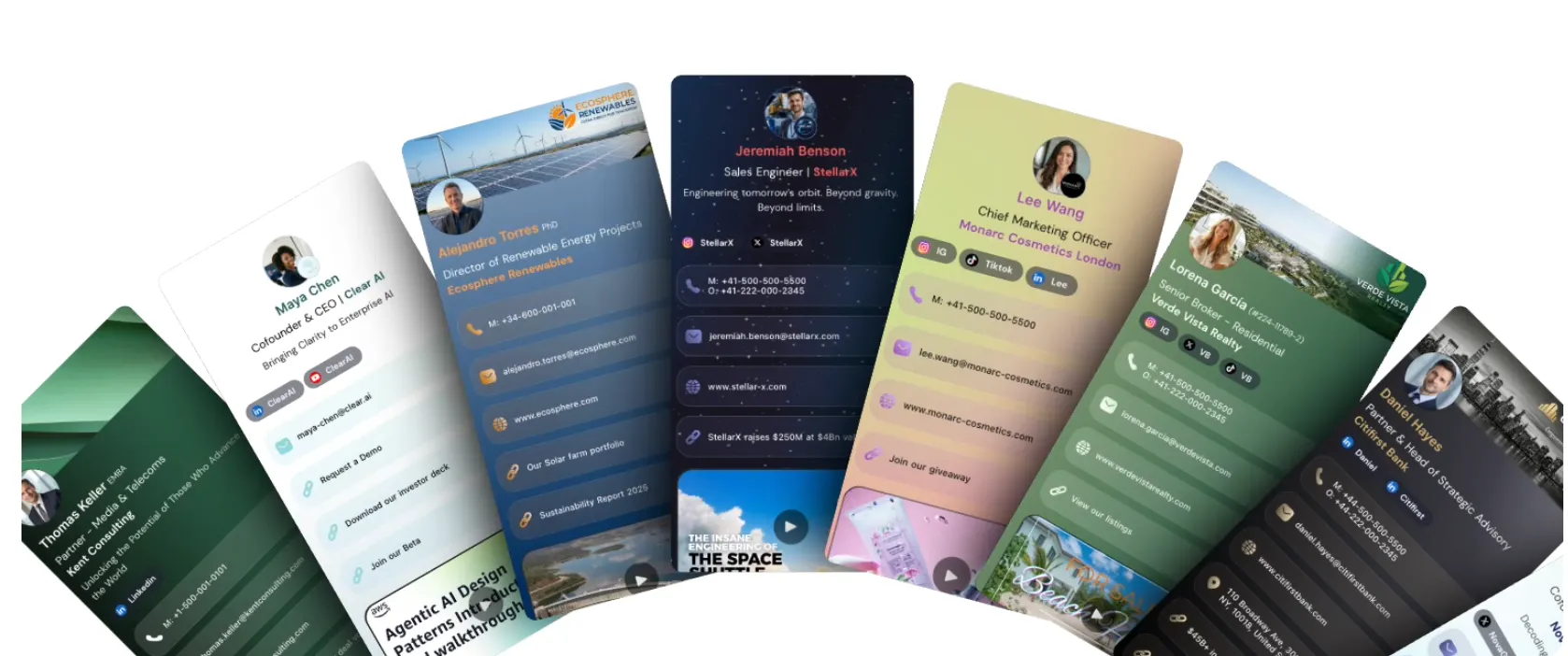
With KADO’s contact management tools, you can capture leads at events, tag contacts by segment, add notes from conversations, and set follow-up reminders that keep every interaction personal. Each digital business card your team shares carries consistent brand assets, so your brand experience stays cohesive from the first handshake to the final close. KADO integrates with Salesforce, HubSpot, and Zapier, connecting your networking activity directly to your existing marketing and sales workflows. The result is a personalized relationship management system that scales with your team.
Frequently Asked Questions
What is branding personalization?
Branding personalization is the practice of tailoring brand messages, experiences, and touchpoints to individual customer preferences, behaviors, and lifecycle stages. It goes beyond demographic targeting to use real-time behavioral signals for dynamic, relevant interactions.
What are the top benefits of brand personalization?
The primary benefits include up to 40% more revenue for personalization leaders, higher conversion rates, reduced marketing waste, and stronger customer loyalty. Nearly 75% of consumers are more likely to purchase from brands that personalize their experience.
How do i start implementing personalized branding?
Begin by unifying customer data across marketing, commerce, and service platforms. Then build behavioral segments, incorporate real-time signals, and coordinate messaging across channels before layering in AI-driven content delivery.