Go back to list of posts
Custom branding: 300% ROI impact on networking success
Last modified: August 5, 2026



Custom branding enhances lead generation and recall at networking events. Targeted, high-value items tied to digital follow-ups deliver measurable ROI. Integrating physical and digital touchpoints multiplies engagement and long-term impressions.
Custom branding is often written off as a stack of logo-printed pens sitting in a conference tote. That thinking costs mid-sized enterprises real pipeline. When branding strategy aligns with lead generation goals, the results go well beyond name recognition. We’re talking about measurable spikes in booth traffic, qualified lead capture, and recall rates that outlast any conversation. This guide walks you through how to select, deploy, and measure custom branding so it functions as a genuine networking asset, not a budget line item that disappears into a drawer the same afternoon it’s handed out.
Key Takeaways
| Point | Details |
|---|---|
Strategic branding wins leads | Custom-branded swag tied to networking goals drives traffic, conversations, and can achieve up to 300% ROI. |
Item selection shapes outcomes | Choosing between high-perceived-value versus high-visibility items determines whether you boost lead quality or brand awareness. |
Measure beyond impressions | Track retention, recall rates, and lead data to quantify branding’s true impact. |
Hybrid branding excels | Combining digital and physical assets amplifies buyer engagement, expanding networking effectiveness. |
Personalization is essential | Tailoring swag for executives or local networks enhances perceived value and strengthens business relationships. |
How custom branding transforms networking results
Most networking handoffs are forgettable. You exchange information, shake hands, and both parties move on. What changes that dynamic is a branded touchpoint that carries your message past the moment. Custom branding shifts your presence from passive to proactive. It gives prospects something physical to interact with, and that interaction triggers recall.
The numbers back this up clearly. Custom swag drives booth traffic and sparks real conversations at events, with an ROI that can reach up to 300%. That’s not a rounding error. For a mid-sized enterprise investing in trade shows or sales events, that return has significant budget implications.
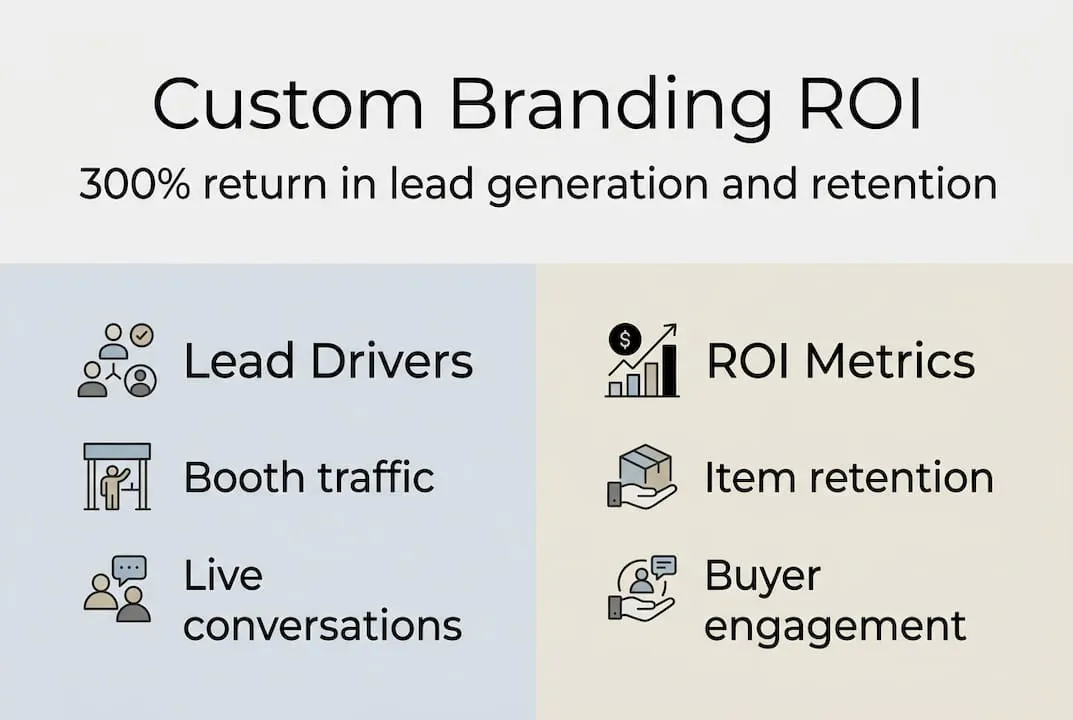
But ROI doesn’t happen automatically. The items you distribute need to be relevant, useful, and tied to a follow-up system. A branded power bank handed to someone who just asked about your software means something. A generic tote bag handed to everyone who walks past means very little. Specificity drives performance.
To build a branding strategy that actually converts, consider these foundational principles:
- Align the item to your audience’s daily workflow. Tech accessories, notebooks, and desk tools get repeated use, which means repeated exposure to your brand.
- Tie giveaways to a trackable action. Scan a QR code, fill out a form, or connect via a digital business card before receiving the item.
- Use branded materials to open conversations, not close them. Think of swag as a first-touch trigger, not a final impression.
- Sync every branded interaction with your CRM. If you can’t track it, you can’t measure it.
Enterprises that explore branding strategies for all industries often discover that the highest-performing branded programs are built around specificity and data, not volume. Handing out 500 identical items rarely outperforms handing out 100 targeted ones. That’s the shift in thinking that separates brands that network effectively from those that just show up.
Having set the stage for custom branding’s strategic role, let’s explore how to tailor item selection for maximum networking impact.
Choosing the right custom branding for lead generation
Not all branded items serve the same purpose. Some are built for visibility. Others are built for conversion. Mixing up these goals is one of the most common mistakes enterprise marketing teams make.

According to lead gen vs. awareness strategies, high-perceived-value items drive lead gen most effectively when gated for qualified prospects. That means you don’t give away your premium item to everyone. You gate it. A prospect who completes a demo request, submits a business card, or scans your digital card earns the premium item. That simple friction filters your leads and increases their quality.
Here’s a quick framework for matching item type to goal:
| Goal | Item type | Examples |
|---|---|---|
Lead generation | High-perceived-value | Tech accessories, leather notebooks, gift sets |
Brand awareness | High-visibility | Tote bags, pens, lanyards, stickers |
Relationship building | Personalized | Custom gifts, handwritten notes, digital cards |
Event follow-up | Digital tools | NFC cards, QR code links, digital portfolios |
For enterprise sales teams specifically, here are the steps we recommend for building a lead-focused branded item program:
- Define the conversion action first. What does a qualified lead actually do? Set that as the trigger for receiving the premium item.
- Segment your inventory. Keep high-value items separate from general awareness swag. Train your team on who gets what.
- Layer in digital touchpoints. A digital business card that syncs to your CRM captures the lead automatically. Explore request demo digital cards to see how seamless that process can be.
- Test item performance by event type. A tech accessory may outperform at a software conference. A quality pen set may perform better at a legal or financial services event.
- Review conversion data quarterly. If a specific item isn’t driving leads, rotate it out. Treat branded items like any other campaign asset.
Pro Tip: For C-suite meetings or high-stakes client conversations, personalization matters more than price point. A branded item with the recipient’s name or company logo engraved signals preparation and intent. It says you did your homework. That’s the kind of impression that converts. Teams working in specialized fields, like hybrid branding for lawyers, understand that decision-makers respond to relevance, not volume.
Now that you know what types of items perform for specific goals, let’s quantify their true value over time.
Measuring retention and ROI in custom branding
Branded items that get used repeatedly are delivering impressions every single day. That’s where the long-term ROI lives. A single premium item handed to one prospect at a conference can generate hundreds of impressions over its usable life, far exceeding the cost of the item itself.
“Buyer engagement is 5x higher with hybrid digital and physical branding approaches, and promotional items used for over a year consistently outperform short-use alternatives in recall and conversion.”
Promo items with retention exceeding one year and buyer engagement 5x higher with hybrid digital and physical branding are the benchmark to aim for. Here’s how to structure your measurement approach:
| Metric | What to track | Benchmark |
|---|---|---|
Item retention rate | How long prospects keep the item | 12+ months for premium items |
Impression count | Estimated daily/weekly exposures | 300+ impressions per item |
Lead recall rate | Prospects who remember your brand | 60%+ unaided recall |
CRM lead tie-in | Branded interactions linked to contacts | 100% of gated items |
The critical step most teams skip is connecting physical branded interactions to CRM data. If someone receives a branded item after scanning your digital card, that interaction should auto-populate in your pipeline. Digital contact management tools make that sync possible without manual entry, which removes a major gap in most enterprise networking workflows.
Here’s what a strong measurement program includes:
- Post-event surveys asking prospects if they still have your branded item and how they’ve used it.
- QR code tracking on items to monitor scans and click-through rates beyond the initial event.
- CRM tagging by campaign source so you can link revenue back to specific branded programs.
- Repeat engagement rate measuring how often a branded touchpoint leads to a second conversation.
Keep an eye on the digital branding trends blog for updates on measurement frameworks as hybrid strategies continue to evolve. The brands winning in this space treat every branded item as a data point, not a donation.
Beyond metrics, there are strategic methods to activate custom branding across different channels.
Strategic activation: Using custom branding for multi-channel networking
Knowing what to give out and how to measure it is only part of the picture. The real performance gains come from activating custom branding across multiple channels simultaneously. In-person events, digital platforms, client meetings, and field sales all offer distinct opportunities.
Here’s where modern enterprise teams are seeing the strongest results:
- In-person events: Deploy gated premium items alongside digital business cards. Every scan creates a CRM-ready contact. Every item handed over reinforces the interaction.
- Client meetings: Bring one personalized branded item that reflects what you know about the client’s business. Generic swag in a boardroom reads as impersonal. Personalized items signal partnership.
- Digital channels: Share your digital card profile on LinkedIn, via email, and through event platforms. NFC-enabled cards let contacts tap their phone to receive your full profile instantly.
- Hybrid scenarios: Combine a physical item with a digital follow-up sequence. The item creates recall; the digital sequence creates the conversion pathway.
Field sales reps use vehicle branding for local visibility, while personalization works especially well for C-suite engagement. Both tactics reflect the same principle: context drives impact. A billboard-style branded vehicle works for territory reps covering regional markets. A handwritten note accompanying a premium gift works for an enterprise deal where relationship depth matters.
Pro Tip: If your team covers a specific geographic territory, vehicle branding creates consistent impressions with zero ongoing effort. Pair that with a QR code linking to your digital business card, and you’ve created a local lead capture system that runs passively.
For those in specialized verticals, the activation strategy needs to match the audience. Consultant networking tools and real estate branding solutions both demonstrate how industry-specific activation beats generic approaches every time.
You’re now equipped with methods for activating custom branding. Let’s explore what most guides overlook.
Why average branding underperforms: A fresh perspective on networking ROI
Here’s the uncomfortable truth most enterprise teams don’t want to hear: the majority of branded programs are designed around convenience, not conversion. Budget gets approved, items get ordered, boxes get shipped to an event, and then everyone calls it marketing. The actual performance data rarely gets reviewed.
We’ve seen this pattern repeat across industries. Companies spend more on mid-tier swag distributed to everyone than they would on fewer, better items distributed to the right people. The math never works in their favor.
Hybrid branding solutions drive real buyer engagement and stronger relationships when physical and digital elements are combined intentionally. The brands that figure this out stop thinking about branded items as expenses and start thinking about them as revenue-generating touchpoints.
Personalization is the real differentiator. An item that reflects what you know about the recipient lands differently than one that reflects what was cheapest to produce. Explore industry-centered branding to see how tailoring your approach to specific sectors produces better results with less waste.
Next steps: Empower your networking with custom digital branding
The strategies in this guide point in a clear direction: custom branding that integrates physical and digital touchpoints outperforms everything else in enterprise networking. The question is how to make that shift practically and quickly.
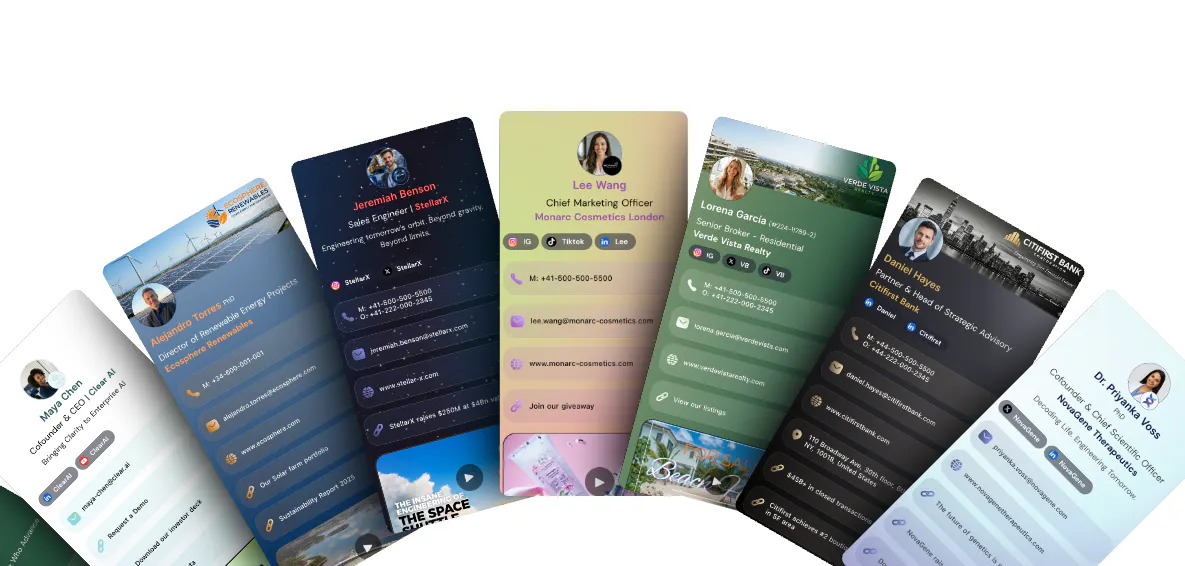
KADO’s digital business card solutions let your team design, deploy, and track branded digital cards in minutes. Pair those with NFC business cards for tap-to-connect interactions at in-person events, and you’ve eliminated the gap between physical and digital networking. Whether you’re in financial services, consulting, or enterprise sales, industry-specific options like financial advisor branding show how adaptable the platform is. It’s a practical next step that connects directly to the lead generation and measurement goals we’ve covered here.
Frequently Asked Questions
What types of branded items produce the most networking leads?
Premium, high-perceived-value items like tech accessories and notebooks drive lead generation most effectively when targeted and gated for qualified prospects rather than distributed broadly.
How can enterprises measure the ROI of custom branding in networking?
Track item retention, impressions, recall rates, and CRM lead data to connect branded assets to measurable sales outcomes. Promo items retained for over a year consistently show the strongest long-term ROI.
What’s the benefit of integrating digital branding with physical promotional items?
Hybrid approaches multiply buyer engagement by up to 5x, increase recall rates, and create trackable lead pathways that physical-only strategies simply cannot replicate.
Are low-cost branded items effective for C-suite networking?
No. Personalize for C-suite contacts and prioritize quality over cost. Low-value generic items signal a lack of preparation and can actually work against your brand in high-stakes conversations.