Go back to list of posts
Bootstrapping: The Founder's Complete Guide to Self-Funding Your Startup
Last modified: April 12, 2026


Most startup stories start with a pitch deck, a VC firm, and a term sheet. But some of the most enduring companies in Silicon Valley were built on something entirely different: their founders' own resources, relentless resourcefulness, and a refusal to give away equity before they had to.
Bootstrapping — building a company without external investment — is one of the most underrated paths to building a sustainable business. It forces clarity, rewards discipline, and keeps founders in control. But it also demands a very different mindset than the fundraising-first approach.
This guide breaks down what bootstrap financing really means, how founders have used it to build billion-dollar companies, and what practical strategies can help you do the same.

What Is Bootstrap Financing?
Bootstrap financing means funding your business using personal savings, early revenue, or reinvested profits — without taking money from venture capitalists, angel investors, or institutional lenders.
The term comes from the old expression "pulling yourself up by your bootstraps." In business, it means making things work with what you already have.
A bootstrapped startup:
- Self-funds operations from the founder's own pocket or early sales
- Avoids dilution by not giving up equity in exchange for capital
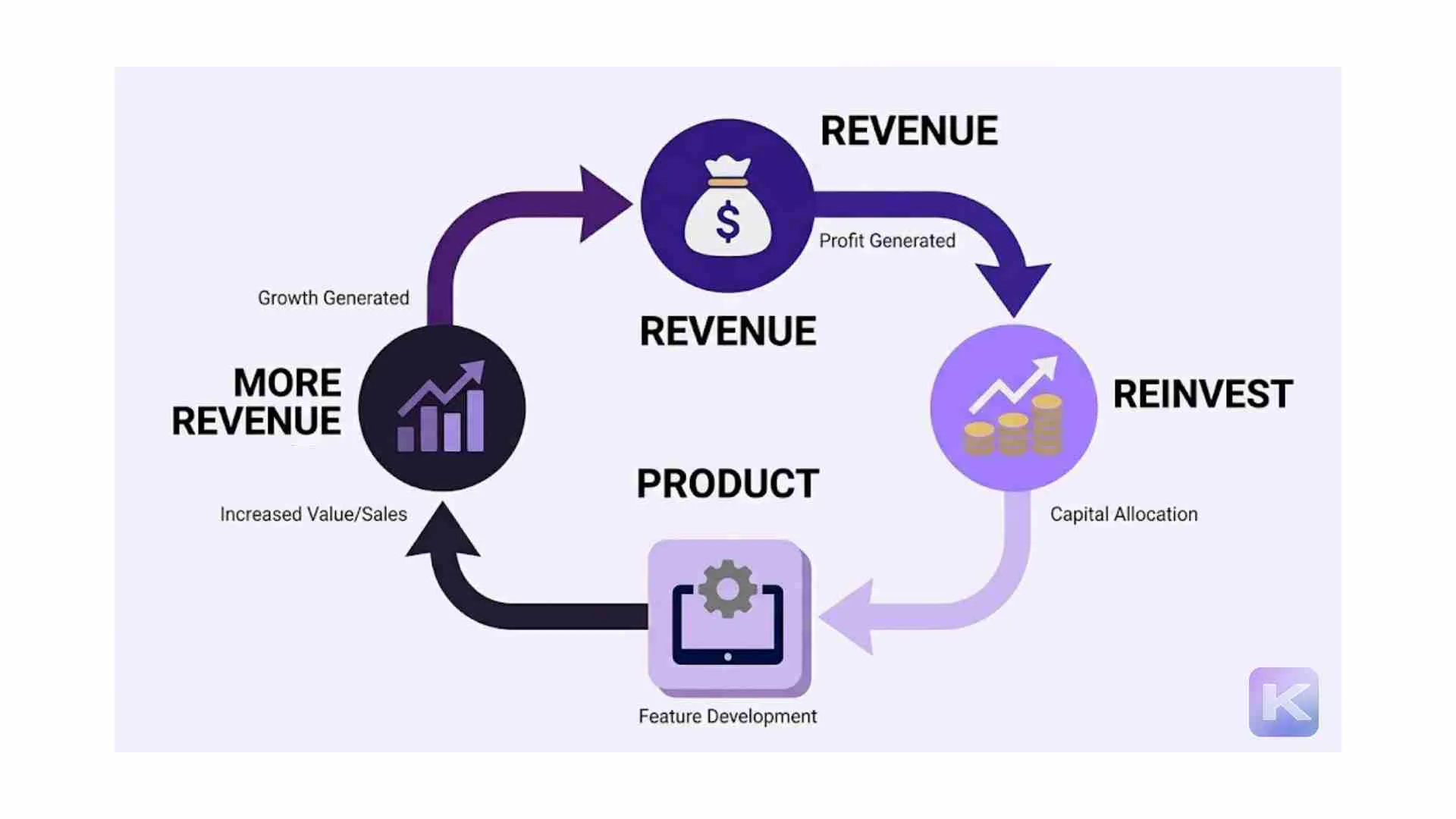
- Grows organically, often reinvesting every dollar of revenue back into the business
- Maintains full control over product decisions, culture, and direction
Bootstrap financing isn't just a fallback when you can't raise money. For many founders, it's a deliberate strategic choice — and in some cases, the smarter one.
Bootstrapping vs. Venture Capital: The Real Trade-Off
Before going deeper, it's worth being honest about what you're choosing between.
| Factor | Bootstrapping | VC |
|---|---|---|
Equity | You keep it all | Diluted each round |
Speed | Slower, constrained | Faster, resource-heavy |
Control | Full | Shared with board |
Pressure | Revenue-focused | Growth metrics |
Risk | Personal financial risk | Investor expectations |
Exit flexibility | High | Often pushed toward IPO or acquisition |
Neither path is universally better. But bootstrapping forces something valuable early on: it makes you prove the business works before you scale it.
Plenty of founders eventually raise capital after bootstrapping. They do it from a position of strength — with revenue, customers, and leverage — rather than desperation.
If you're weighing the two paths, it's worth reading How to Get Seed Funding from VCs to understand what that road actually looks like before deciding which fits your situation.
Famous Bootstrapped Companies You Know
Some of the most successful companies in the world started without a single dollar of outside investment — or bootstrapped for years before ever speaking to a VC.
Mailchimp — Built on Freelance Revenue
Mailchimp is the most frequently cited bootstrapped success story for a reason. Ben Chestnut and Dan Kurzius ran a web design agency in Atlanta, and Mailchimp started as a side project to serve their clients' email marketing needs. For years, they grew slowly, profitably, and without any institutional investment.
They finally sold to Intuit in 2021 for approximately $12 billion — with both founders retaining significant ownership. No VC ever touched their cap table.
GitHub — Bootstrapped Until It Had Leverage
GitHub launched in 2008 with no outside funding. The founders built it evenings and weekends. By the time they raised their first round from Andreessen Horowitz in 2012, they already had millions of users and a profitable business. They raised from a position of complete control — and Microsoft eventually acquired them for $7.5 billion.
Spanx — $5,000 and a Fax Machine
Sara Blakely started Spanx with $5,000 in personal savings. She wrote her own patent, drove around selling to department stores, and kept 100% of her company for over a decade. Spanx became a billion-dollar brand without ever raising outside capital until Blackstone took a majority stake in 2021.
What Y Combinator Taught Us About Lean Startups
Y Combinator — arguably the world's most influential startup accelerator — has consistently backed and celebrated founders who think like bootstrappers, even when they go on to raise significant capital.
The YC model itself reflects this philosophy: give founders a small amount of money ($500K in recent batches) and push them to get to their first paying customers as fast as possible. The entire framework is built around a bootstrapper's mindset.
Paul Graham, YC's co-founder, wrote famously that startups should "do things that don't scale" early on — meaning founders should do manual, scrappy work rather than building perfect systems before they've proven demand.
Several YC alumni explicitly bootstrapped before or during YC:
- Brex — the founders launched a VR company before pivoting, doing consulting work to fund themselves
- Stripe — Patrick and John Collison personally onboarded early merchants before they had infrastructure, the definition of a bootstrapper's mentality
- Pebble (the smartwatch) — initially funded through Kickstarter, essentially a form of bootstrap financing using customer pre-orders
The lesson from YC is consistent: validate before you scale. If you haven't proven people want what you're building, you shouldn't be spending money at scale — investor or otherwise.
If you're still at the idea validation stage, the guide on How to Validate a Business Idea walks through a practical framework for testing your concept before committing significant resources.
How Bootstrapping Actually Works: 5 Core Strategies
There's no single playbook, but most successful bootstrap founders rely on a combination of these approaches.
1. Start With a Service, Build Toward a Product
Many bootstrapped companies started as agencies or consulting businesses — using client work to generate cash flow while they built the product they actually wanted to sell.
This is exactly what Mailchimp and Basecamp did. It's also what many solo founders and small teams do today: freelance to fund your SaaS.
The risk is getting stuck in service mode. Set a deliberate milestone — "when we hit X revenue from the product, we stop taking client work" — and hold yourself to it.
2. Charge From Day One
Free tiers, freemium models, and "we'll figure out monetization later" thinking are luxuries that venture-backed companies can afford. Bootstrappers can't.
Charge for your product as early as possible, even if it's early, even if it's imperfect. Early paying customers tell you something free users never will: whether the problem is real enough that someone will part with money to solve it.
A small number of paying users is worth more than thousands of email signups.
3. Keep Your Burn Rate Absurdly Low
The fundamental math of bootstrapping is this: you survive as long as your revenue exceeds your costs. Every dollar you spend is a dollar that has to come from somewhere.
Bootstrapped founders obsess over burn rate in a way VC-backed founders often don't. That discipline is a feature, not a bug — it builds habits that make the business sustainable even as it grows.
Common practices: no office until necessary, founders doing sales and support themselves, delaying hiring until there's clear demand for the role, using free tiers of software until the business can absorb the cost.
4. Treat Customers Like Investors
Your paying customers are funding your business. That means their feedback deserves the same weight as a VC's guidance — arguably more, since they're the ones with actual skin in the game.
Talk to customers constantly. Sell to them before the product is built. Let their needs drive your roadmap. This keeps development focused and revenue predictable.
5. Reinvest Aggressively
Profitable bootstrapped businesses face a different problem than VC-backed ones: the temptation to pocket the profits. The founders who build significant companies on this path tend to reinvest cash into growth — hiring the right people, improving the product, expanding to new markets — while keeping personal overhead low.
Networking as a Bootstrapped Founder: Your Unfair Advantage
When you can't buy growth through paid acquisition at scale, relationships become your distribution channel.
Bootstrapped founders who build strong networks punch far above their weight. A warm introduction to a key customer can replace thousands of dollars in ad spend. A referral from a respected peer can unlock a partnership that takes months of outbound to replicate.
This is where modern tools matter. When you're at a conference, a startup event, or even a casual industry dinner, the way you exchange contact information and follow up with new connections determines how much value those interactions actually create.
Tools like KADO let you share a digital business card instantly, capture notes about who you met, and follow up systematically — which is exactly the kind of low-cost, high-leverage approach that fits a bootstrapper's mindset. No paper, no wasted cards, no contacts lost in a pile of emails.
If you're building your early customer base through networking, joining the right communities matters enormously. The guide to Entrepreneur Networking Groups You Should Join is a useful starting point for finding the rooms where your next customers, collaborators, and early champions are likely to be.

When Does It Make Sense to Raise After Bootstrapping?
Bootstrapping doesn't have to mean "never raise money." Many of the most successful fundraising stories start with a founder who bootstrapped long enough to have real leverage.
GitHub raised after millions of users. Shopify bootstrapped for years before raising. Atlassian — makers of Jira — was profitable for a decade before taking on private equity.
The question isn't whether to raise — it's why and when. Raising because you have a proven model and need capital to accelerate a market opportunity is fundamentally different from raising because you don't know if the business works yet.
If you do eventually decide to approach investors, understanding how VC firms actually evaluate companies is essential. Our breakdown of What is Venture Capital and How to Break into the Industry and the guide to Top VC Firms to Watch can help you approach those conversations from an informed position.
And if you get to a pitch, the work you've done as a bootstrapper — real customers, real revenue, real unit economics — is the most compelling story you can tell. Knowing how to deliver an elevator pitch clearly and confidently will make that story land.

Common Mistakes Bootstrapped Founders Make
Even with the right mindset, there are predictable failure modes.
Undercharging too long. Fear of pricing leads founders to price below value for months or years. If people are paying, test a higher price sooner than feels comfortable.
Hiring before it's necessary. Hiring is the biggest single cost in most businesses. Each hire should be tied to a clear revenue threshold or a bottleneck you can quantify.
Building instead of selling. It's easier to write code or improve the product than to pick up the phone and sell. The best bootstrapped companies are distribution-first — they get customers, then build.
Ignoring personal finances. Bootstrapping often means paying yourself less than you could earn elsewhere. Have an honest runway calculation that includes your personal obligations, not just the company's burn.
Isolating yourself. Solo bootstrapping is mentally taxing. The founders who sustain it tend to stay embedded in communities — founder groups, accelerator alumni networks, local startup scenes — where they get honest feedback and moral support.
Final Thoughts
Bootstrapping isn't the romantic alternative to "real" startups — it is real startups. Mailchimp, GitHub, Basecamp, and Spanx weren't lesser companies because they didn't raise a Series A in year one. In many ways, they were stronger for it.
What bootstrap financing actually demands is the discipline to prove your business works before you scale it, the creativity to grow without a war chest, and the focus to stay close to customers when that's your only real source of capital.
Whether you bootstrap forever or use it as a launchpad before raising, the habits it builds — revenue discipline, lean operations, customer obsession — are the foundation of every sustainable business.
The tools you use to network, build relationships, and convert early conversations into customers matter more than most founders realize at the start. Keep them simple, keep them effective, and make every connection count.
Frequently Asked Questions
What is bootstrap financing exactly?
Bootstrap financing means funding a startup using personal resources, revenue, or reinvested profits rather than outside investment. The founder retains full ownership and avoids dilution by growing the business organically.
Can you bootstrap a tech startup?
Yes, and many successful ones started that way. GitHub, Basecamp, and Mailchimp are all examples of tech companies that bootstrapped for years before raising outside capital — or never raised at all. SaaS businesses in particular can be well-suited to bootstrapping because their margins and recurring revenue model create sustainable cash flow.
What are the advantages of bootstrapping a business?
Full ownership and control, no investor pressure on direction or timeline, a revenue-focused discipline that builds sustainable habits, and the ability to make decisions without board approval. Many founders also find that bootstrapping forces clarity about what customers actually value.
Is bootstrapping the same as not having a business plan?
No. Bootstrapping is a financing strategy, not a sign of informality. The best bootstrapped founders are often more rigorous about financial planning than their VC-backed peers, because every dollar matters.