Go back to list of posts
Examples of Professional Branding That Build Real Visibility
Last modified: June 30, 2026


Professional branding is defined as the deliberate, strategic expression of your identity, values, and expertise to a specific professional audience. The best examples of professional branding share one common trait: they combine internal clarity about who you are with consistent, visible execution across platforms. Done right, personal branding, the industry’s standard term for individual-level professional identity, generates career opportunities, recruiter attention, and meaningful connections. This article breaks down eight proven branding types, explains how to apply them on LinkedIn and other networks, and shows you how to measure what’s working.
1. What are 8 effective examples of professional branding strategies?
The eight approaches below represent the most replicable and well-documented personal branding strategies available to working professionals today.

Category ownership: the niche expert
Owning a specific category means becoming the go-to name for one defined topic. A cybersecurity attorney who writes only about data privacy law, or a financial advisor who focuses exclusively on physicians, builds faster recognition than a generalist. The narrower your claim, the easier it is for others to remember and refer you.
Value-driven executive branding
Anchoring your brand to your current job title is one of the most common and costly mistakes professionals make. Durable brands transcend jobs and employers by building around core values and a professional philosophy. A VP of Sales who brands around “ethical revenue growth” retains their identity through promotions, layoffs, and career pivots.
Content cadence for consistent visibility
Consistency beats brilliance in professional branding. The Careery branding guide recommends a minimum cadence of one LinkedIn post per week, one long-form article per month, and one visibility event per quarter. That rhythm keeps your name in front of your network without requiring you to produce content daily.
Pro Tip: Schedule your monthly long-form article at the start of each month. Write it in one sitting, then edit over two days. This prevents the “I’ll do it later” trap that kills most content plans.
Symbolic design in digital profiles
Your LinkedIn banner, profile photo, and featured section work together as a visual system. Visual and narrative coherence increases visitor trust and engagement far more than a polished headshot alone. A consultant who uses a consistent color palette, a banner that states their specialty, and a featured section with case studies signals credibility before a visitor reads a single word.
Deep content creation for lasting authority
One well-researched, 3,000-word article on a specific professional challenge creates more durable brand value than a dozen surface-level posts. Quality content yields better brand equity because search engines and AI tools prioritize depth when surfacing expert voices. Think of it as building a reference piece that colleagues bookmark and share for years.
Engagement-first approach before publishing
Most professionals launch a content strategy and wonder why no one reads their posts. The fix is counterintuitive. Spending two weeks engaging others, through comments, replies, and reactions, builds confidence and early visibility before you publish original content. You warm up your network before asking it to pay attention.
External validation through testimonials
Claims without proof carry little weight. The Harvard personal branding framework recommends collecting nine external testimonials: three from professional contacts, three from personal connections, and three from peers. You can boost your profile by requesting reviews from former employers and collaborators. Those third-party voices validate what you say about yourself.
Narrative coherence across channels
Your LinkedIn summary, your email signature, your conference bio, and your website about page should all tell the same story. Inconsistency confuses people. A recruiter who reads your LinkedIn profile and then finds a completely different narrative on your personal website will move on. Coherence signals that you know who you are, and that confidence is itself a branding asset.
2. How to apply these examples on LinkedIn and professional networks
Translating the eight strategies above into daily practice requires a clear system. LinkedIn remains the primary platform for most professionals, but the principles apply across any professional network.
Profile optimization comes first. A keyword-optimized LinkedIn profile with consistent posting generates five times more connection requests from recruiters and peers. That means your headline, about section, and featured content must all reflect the same core message.
Here are the practical steps to apply each strategy:
- Weekly posts: Share one short observation, lesson, or question related to your niche. Aim for 150–300 words. Avoid promotional language.
- Monthly articles: Publish one long-form piece on LinkedIn or your own site. Use a specific, searchable title. Link back to it in future posts.
- Banner and visuals: Update your LinkedIn banner to state your specialty in plain language. Use a professional photo with a clean background.
- Featured section: Pin your three best pieces of content, a case study, a testimonial, and a long-form article. Rotate them quarterly.
- Comments strategy: Spend 15 minutes per day commenting on posts from people in your target network. Add a specific observation, not just “Great post!”
- Groups and communities: Join two or three LinkedIn groups where your target audience is active. Contribute answers, not pitches.
Pro Tip: Turn your best LinkedIn comment into a standalone post. If a comment gets strong engagement, it means the topic resonates. Expand it into 200 words and publish it the following week.
Design alignment matters more than most professionals realize. When your banner, profile photo, and featured content share a consistent visual language, your profile functions as a personal branding asset rather than a static resume. Visitors form an impression in seconds. Make those seconds count.
3. What are the common pitfalls in professional branding?
The most frequent mistakes in personal branding are structural, not tactical. Fixing them requires stepping back from content and returning to identity.
- Anchoring to a job title: When your brand is “Senior Manager at [Company],” a layoff erases your identity overnight. Build around what you believe and how you work, not where you currently sit.
- Starting with content before clarity: Many professionals start with tactics instead of identity, which reduces effectiveness. Write your core professional statement before you write a single post.
- Treating profiles as resumes: A LinkedIn profile that lists job duties reads like a resume. A profile that tells a story of impact, values, and direction reads like a brand. The difference is narrative, not formatting.
- Skipping external validation: Self-promotion without third-party proof feels hollow. Collect testimonials, endorsements, and case study quotes before you claim expertise publicly.
- Inconsistent messaging across channels: If your LinkedIn summary says you specialize in supply chain consulting but your personal website describes you as a general business advisor, you create doubt. Audit all your profiles annually and align them.
The underlying issue in most of these pitfalls is the same: professionals rush to visibility before they have clarity. Slow down, define your identity first, and the content strategy becomes obvious.
4. How to measure the impact of your professional branding efforts
Measuring personal branding is less precise than measuring ad spend, but it is not guesswork. The right metrics tell you whether your brand is gaining traction or stalling.
| Metric | What to track | Why it matters |
|---|---|---|
Profile views | Weekly LinkedIn profile view count | Shows whether your content is driving curiosity |
Connection quality | Seniority and relevance of new connections | Indicates whether the right people are finding you |
Post engagement | Likes, comments, and shares per post | Reveals which topics resonate with your audience |
Endorsements | New skill endorsements per quarter | Signals growing peer recognition of your expertise |
Speaking invitations | Event and panel invitations per year | Measures real-world brand recall and authority |
Follow-up conversion | Contacts who respond to outreach after meeting | Tracks whether your brand creates lasting impressions |
The last metric is one most professionals overlook. After a conference or networking event, how many people remember you well enough to respond to a follow-up message? Tools like KADO help you capture and organize contacts after events, so you can track follow-up rates and measure whether your in-person brand matches your digital one.
Pro Tip: Review your LinkedIn analytics every monday morning. Note which post from the previous week got the most impressions, then write your next post on a related topic. This creates a feedback loop that sharpens your content over time.
Key takeaways
The most effective professional branding combines a clear, values-based identity with consistent content, external validation, and visual coherence across every channel you use.
| Point | Details |
|---|---|
Identity before content | Define your core values and professional philosophy before publishing anything. |
Content cadence drives visibility | Post weekly on LinkedIn, publish monthly articles, and attend one visibility event per quarter. |
External validation builds trust | Collect nine testimonials from professional, personal, and peer circles before claiming expertise. |
Narrative coherence is non-negotiable | Align your LinkedIn, website, email signature, and event bio to tell the same story. |
Measure follow-up conversion | Track how many new contacts respond after events to gauge real-world brand recall. |
Our perspective on professional branding examples
We have worked with thousands of professionals who want to build a stronger presence, and the pattern we see most often is this: people confuse activity with identity. They post three times a week, redesign their LinkedIn banner, and update their headline, then wonder why nothing changes. The problem is not the tactics. The problem is that the underlying identity was never defined.
The professionals who build genuinely strong brands do something different. They spend time, sometimes weeks, getting clear on what they actually believe about their field. Not what sounds impressive, but what they would argue for in a room full of skeptics. That clarity is what makes every post, every comment, and every conversation feel consistent and credible.
We also think the engagement-first approach is underrated. Commenting thoughtfully on other people’s content for two weeks before publishing your own is not a delay. It is research. You learn what your audience cares about, you build goodwill, and you arrive at your first post with momentum instead of silence.
The McKinsey brand platform relaunch is a useful reference point here. Reaching 2 million senior executives with a single, clear message produced measurable recall gains in three months. The lesson scales down to individual professionals: clarity of message, delivered consistently to the right audience, works faster than most people expect.
Build your brand around what you stand for, not where you currently work. The rest follows.
— KADO
How KADO helps you turn networking into lasting connections
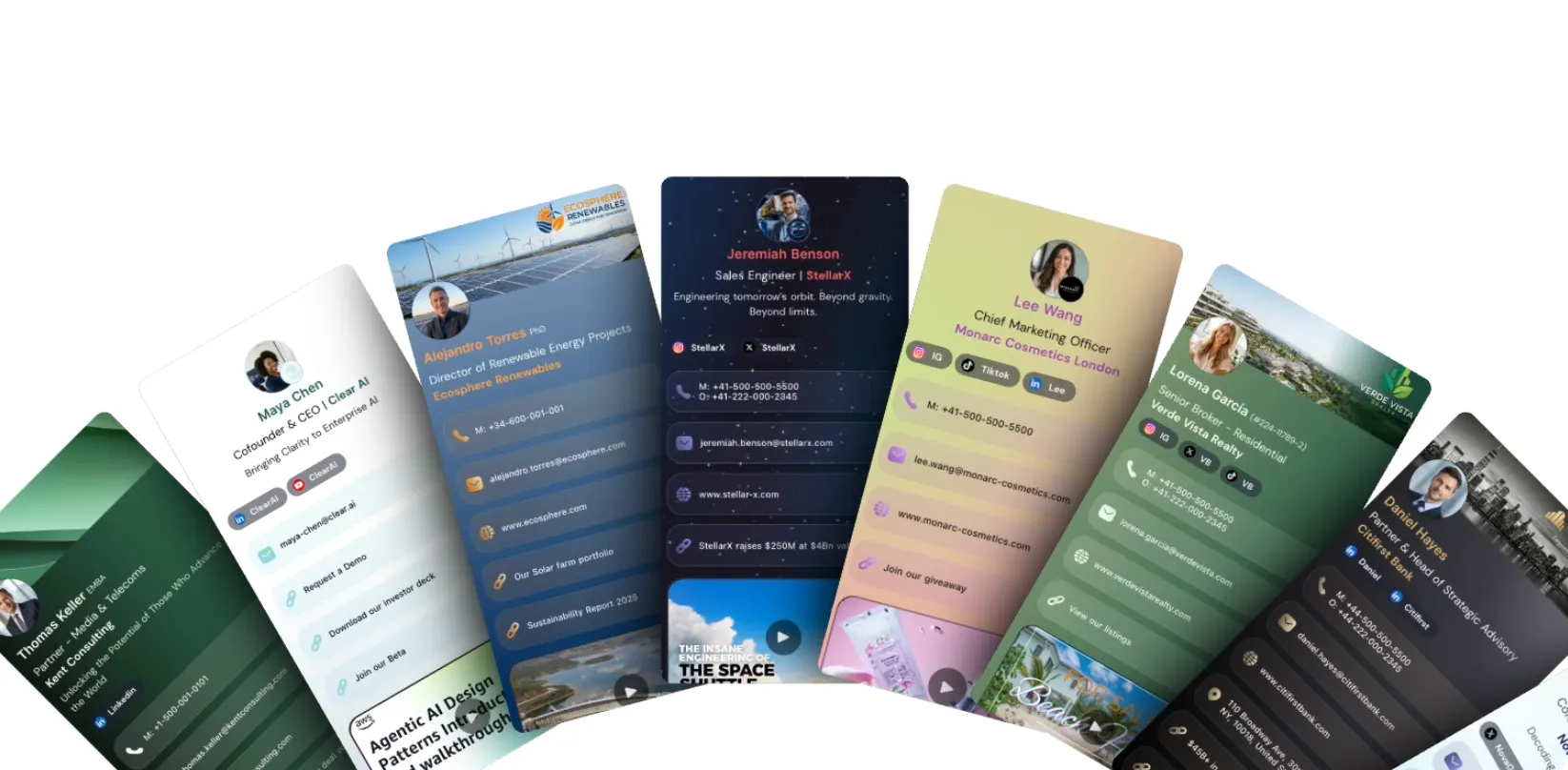
Professional branding does not stop when you leave a conference room. The follow-up is where most of the value is either captured or lost.
KADO is a digital business card and networking platform built for professionals who take relationship-building seriously. Share your digital card via QR code, NFC, or a direct link, and every new contact lands in one organized place. You can add notes, tags, and follow-up reminders immediately after a conversation, so no connection slips through. For teams attending events and conferences, KADO also helps you measure event ROI by tracking how many contacts convert into real opportunities. Your brand gets you in the room. KADO helps you stay in the relationship.
Frequently Asked Questions
What is professional branding?
Professional branding is the deliberate expression of your identity, values, and expertise to a defined audience. It is the individual-level application of what the marketing world calls personal branding.
How often should I post on LinkedIn for professional branding?
Post at least once per week on LinkedIn, publish one long-form article per month, and attend one visibility event per quarter, according to the Careery branding framework.
How many testimonials do I need for a credible professional brand?
The Harvard personal branding framework recommends nine testimonials: three from professional contacts, three from personal connections, and three from peers.