Go back to list of posts
Benefits of Digital Networking for Career and Business Growth
Last modified: August 3, 2026


Digital networking multiplies professional visibility, speeds opportunity discovery, and makes relationships scalable across any geography. For professionals and business leaders in the United States, the shift from conference rooms to LinkedIn messages and virtual events has not just changed where networking happens — it has fundamentally changed what’s possible.
The core benefits of digital networking, ranked by impact:
- Amplified visibility: Your profile and content work for you around the clock, attracting inbound connections without a single cold call.
- Faster opportunity discovery: Relevant jobs, clients, and partnerships surface through algorithms, communities, and shared content — not just who you happen to sit next to.
- Scalable relationship building: You can maintain hundreds of meaningful professional relationships with the right tools and habits.
- Measurable ROI: Digital channels produce trackable data — engagement rates, response rates, meetings booked — that in-person networking rarely does.
- Better follow-up: Every conversation is documented, searchable, and easy to act on.
Pro Tip: Set a specific networking goal before you open any platform — “book two discovery calls this month” beats “grow my network” every time.

Why did professional networking move online?
The structural shift to digital networking is durable, not a pandemic-era workaround. LinkedIn now has a massive global membership across more than 200 countries, which means the professional world’s largest directory, referral engine, and job board is entirely online. That scale alone changed the calculus for anyone serious about career or business growth.
Two other forces locked in the change. Remote and hybrid work separated colleagues who once networked organically in hallways and conference rooms, pushing relationship-building onto digital channels by necessity. At the same time, virtual events and online communities eliminated the travel cost and time barriers that had always made in-person networking expensive and geographically limited.

The result: a professional in rural Ohio can now pitch a San Francisco VC, join a Slack community of fintech founders, and attend a virtual conference in London — all in the same week, without a flight.
What are the real benefits of digital networking?
Each benefit below maps to a concrete career or business outcome, with a short template you can use immediately.
Visibility that compounds over time
Publishing a single thoughtful LinkedIn post or article puts your name in front of people who were never going to find you through a referral. Helpful content and strategic commenting increase findability and inbound opportunities over time. For a jobseeker, that means recruiters finding you. For a consultant, it means prospects reaching out before you pitch them.
Template — thought leadership post opener: “Three things I learned after [specific experience] that changed how I approach [topic]:”
Opportunity discovery without geography limits
Online networking removes traditional barriers, letting professionals connect with investors and peers across major hubs they couldn’t reach before. A sales director in Memphis can join a niche SaaS community and land a partnership with a Boston startup — without a single flight.
Template — first DM after joining a community: Subject: Quick question from a fellow [community name] member “Hi [Name], I saw your post on [specific topic] and it matched a challenge I’m working through. Would you be open to a 20-minute call this month?”
Relationship scale with documented context
Digital interactions are recorded — messages, posts, comments — and easier to track and follow up, which improves conversion over time. You can maintain 200 active professional relationships with notes and tags; try that with a stack of paper business cards.
Inbound leads through thought leadership
Content-led networking attracts the right people rather than chasing them. A well-placed comment on an industry thread can generate more qualified leads than a cold email campaign.
Template — 1-week follow-up after a virtual event: “Hi [Name], great connecting at [event]. I’ve been thinking about what you said on [topic] — here’s a resource that might be useful: [link]. Happy to continue the conversation.”
Where should you actually spend your networking time?
Platform choice matters more than effort. Here’s how to triage by goal:
- LinkedIn for professional visibility, recruiting, and B2B lead generation. With over a billion members, it’s the default starting point for most professionals.
- Niche Slack groups, Discord servers, and industry forums for tight communities. Industry Slack groups and specialized forums give access to niche communities and specialized hiring or lead opportunities that LinkedIn’s broad feed rarely surfaces.
- Virtual events and webinars for discovery. A clear pre-event plan, in-event engagement, and post-event follow-up increase the quality and conversion of contacts.
- Twitter/X and content platforms for thought leadership and building a public professional brand.
Pre-outreach checklist
Before you send a connection request or DM, run through this:
- ✅ Read their recent posts or content — reference something specific.
- ✅ Check mutual connections or shared communities.
- ✅ Identify one concrete reason you’re reaching out (not “to grow my network”).
- ✅ Write a message under 75 words with a soft, specific ask.
- ✅ Confirm your own profile is complete and up to date.
Pro Tip: Personalization signals — a shared alumni network, a comment they made in a webinar, a specific article they wrote — triple response rates compared to generic connection requests.
How do you measure whether your networking is working?
You must track both activity and outcomes. Engagement metrics tell you what’s resonating; conversion metrics tell you what’s generating business.
| KPI | What It Measures | How to Track | Cadence |
|---|---|---|---|
Connection acceptance rate | Quality of outreach targeting | LinkedIn / platform analytics | Weekly |
Engagement rate | Content reach and relevance | LinkedIn Analytics, native dashboards | Weekly |
Response rate on DMs | Message quality and personalization | Manual log or CRM | Weekly |
Meetings booked | Conversion from connection to conversation | Calendar / CRM pipeline | Monthly |
Qualified leads generated | Business impact of networking | CRM (HubSpot, Salesforce) | Monthly |
Follow-up response rate | Relationship depth and timing | Email / CRM | Monthly |
Pro Tip: Vanity metrics — follower counts, total connections — tell you almost nothing about business impact. Focus on meetings booked and qualified leads generated; those are the numbers that tie networking to revenue.
How do you keep digital networking from feeling hollow?
The main risk is transactional outreach: mass-sent, copy-paste messages that signal you want something without offering anything. Digital networking enables pre-research and carefully crafted messages, which can lead to more genuine initial exchanges — but only if you use that capability.
Do / Don’t:
| ✅ Do | ⚠️ Don’t |
|---|---|
Reference something specific they shared | Send the same message to many people |
Offer value before asking for anything | Open with “I’d love to pick your brain” |
Follow up once with a relevant resource | Follow up three times in a week |
Respect response windows (48 hours) | Pitch your product in the first message |
Privacy matters too. Avoid scraping contact data from platforms, and always give people an easy way to opt out of follow-up. Building trust online starts with respecting boundaries before you’ve earned a relationship.
What does digital networking look like in practice?
Four use cases where online networking produces clear, measurable results:
Career change: A marketing manager targeting a move into product management joins two product-focused Slack communities, comments thoughtfully on three threads per week, and sends five personalized LinkedIn requests monthly to product leaders. Within 90 days, she has three informational interviews and one referral to an open role.
Client acquisition (sales): A B2B consultant publishes a weekly LinkedIn post on a niche topic, engages with comments, and follows up with every commenter via DM. Workflow: virtual intro → shared resource → calendar invite → pre-meeting note with their company context. This approach converts at a higher rate than cold email because the prospect already knows the consultant’s thinking.
Recruiting: A hiring manager posts a specific role description in two niche Slack communities and personally messages five candidates who’ve been active contributors. Practitioners recommend using digital for scale and in-person touchpoints for deepening high-value relationships — so the final interview moves to video or in-person.
Event follow-up: After a virtual conference, a sales rep sends personalized follow-ups within 24 hours, referencing a specific session or comment from the event. Response rates drop sharply after 48 hours.
Pro Tip: For high-value relationships, move from digital to in-person as soon as it’s practical — a coffee or lunch converts a warm online connection into a durable professional relationship far faster than another DM.
A repeatable workflow that makes networking measurable
The professionals who get consistent results from digital networking don’t wing it. They follow a four-step pattern:
- Capture — Exchange contact information at the moment of connection using a QR code, NFC tap, or digital business card link. No card, no follow-up.
- Enrich — Add notes, tags, and event context immediately while the conversation is fresh. “Met at SaaStr 2026, interested in API integrations, follow up in two weeks.”
- Manage — Sync the contact to your CRM (Salesforce, HubSpot, or Outlook) and assign a follow-up task with a deadline.
- Measure — Review your pipeline monthly: how many new contacts converted to meetings, and how many meetings converted to opportunities?
KADO supports this entire workflow from one platform — capturing contacts via QR code or NFC, adding notes and tags in the app, and syncing directly to Salesforce, HubSpot, or Zapier. For teams attending conferences or running sales events, KADO’s contact management features keep every rep’s contacts organized and actionable without manual data entry.
Key capabilities to look for in any contact-management or digital-business-card tool:
- QR and NFC sharing for instant contact exchange
- Lead capture forms for events
- Notes, tags, and follow-up reminders per contact
- CRM integrations (Salesforce, HubSpot, Dynamics, Zapier)
- Analytics to track card views, shares, and engagement
Organizing digital contacts with a clear workflow is what separates professionals who get consistent results from those who collect connections and never follow up.
When should you go digital vs. in-person?
Digital networking excels at scale, speed, and documentation. In-person excels at depth, trust, and nonverbal communication. The answer for most professionals isn’t either/or.
Use digital networking to:
- Build initial awareness and credibility through content
- Reach contacts outside your geographic area
- Maintain a large number of relationships efficiently
- Follow up after any event or meeting
Use in-person networking to:
- Deepen relationships that started online
- Close high-stakes deals or partnerships
- Build trust with contacts where nonverbal cues matter
- Attend industry events where serendipitous introductions happen
Most successful networkers adopt a hybrid mindset: scale relationships digitally and use in-person time for deep trust-building. A practical rule: move a digital relationship to in-person (or video) once you’ve exchanged three or more substantive messages and identified a mutual goal.
Digital networking for career growth vs. business growth
The benefits of digital networking apply to both career and business goals, but the tactics differ.
For career growth
- Optimize your LinkedIn profile as a living resume: headline, about section, and featured posts should reflect where you want to go, not just where you’ve been.
- Engage in niche communities where hiring managers and peers in your target role are active.
- Publish content that demonstrates expertise in the domain you want to enter or advance in.
- Request informational interviews via personalized DMs — not to ask for a job, but to learn and get referred.
A strong digital presence signals credibility to recruiters who are actively searching for candidates online before they ever post a role.
For business growth
- Lead with value: publish case studies, data, or insights your target clients care about before pitching anything.
- Use virtual events to get in front of decision-makers in a low-pressure setting.
- Build a referral network by connecting with complementary service providers who serve the same clients.
- Track every contact from first touch to closed deal using a CRM-connected workflow.
Relationship building online takes months — expect six months to a year before meaningful business opportunities emerge. The professionals who treat digital networking as a long game consistently outperform those who sprint and quit.
Key Takeaways
Digital networking produces the most consistent career and business results when you combine platform-specific tactics, personalized outreach, and a repeatable contact-management workflow.
| Point | Details |
|---|---|
Platform triage matters | LinkedIn for visibility; niche Slack/Discord groups for tight communities; virtual events for discovery. |
Personalization drives response | Referencing a specific post, comment, or shared connection significantly improves reply rates over generic messages. |
Measure outcomes, not vanity metrics | Track meetings booked and qualified leads generated — not follower counts or total connections. |
Hybrid approach wins | Use digital networking for scale; shift to in-person for high-value relationship depth and trust-building. |
KADO centralizes the workflow | KADO captures contacts via QR/NFC, adds notes and tags, and syncs to CRM — making follow-up consistent and measurable. |
The long game is the only game worth playing
The professionals we see getting the most from digital networking share one habit: they treat it as relationship infrastructure, not a campaign. They show up consistently in communities, publish content that reflects genuine expertise, and follow up with contacts even when there’s no immediate ask.
Our recommendation is a weekly 30-minute networking block. Use it to send three personalized follow-ups, comment on five posts from people in your target network, and update your contact notes from the week’s conversations. It sounds modest, but compounded over six months, it produces a network that generates inbound opportunities rather than requiring constant outbound effort. Expect six months to a year before the results feel significant — that timeline is normal, not a sign that something isn’t working.
The other habit worth building: a monthly network audit. Review your last 30 contacts, identify who you haven’t spoken to in 60+ days, and send one short, genuine check-in. No ask, no pitch. Just a relevant article or a quick “thinking of you after our last conversation.” That practice alone keeps relationships warm without feeling manufactured.
Speed up your follow-up with a contact-capture workflow
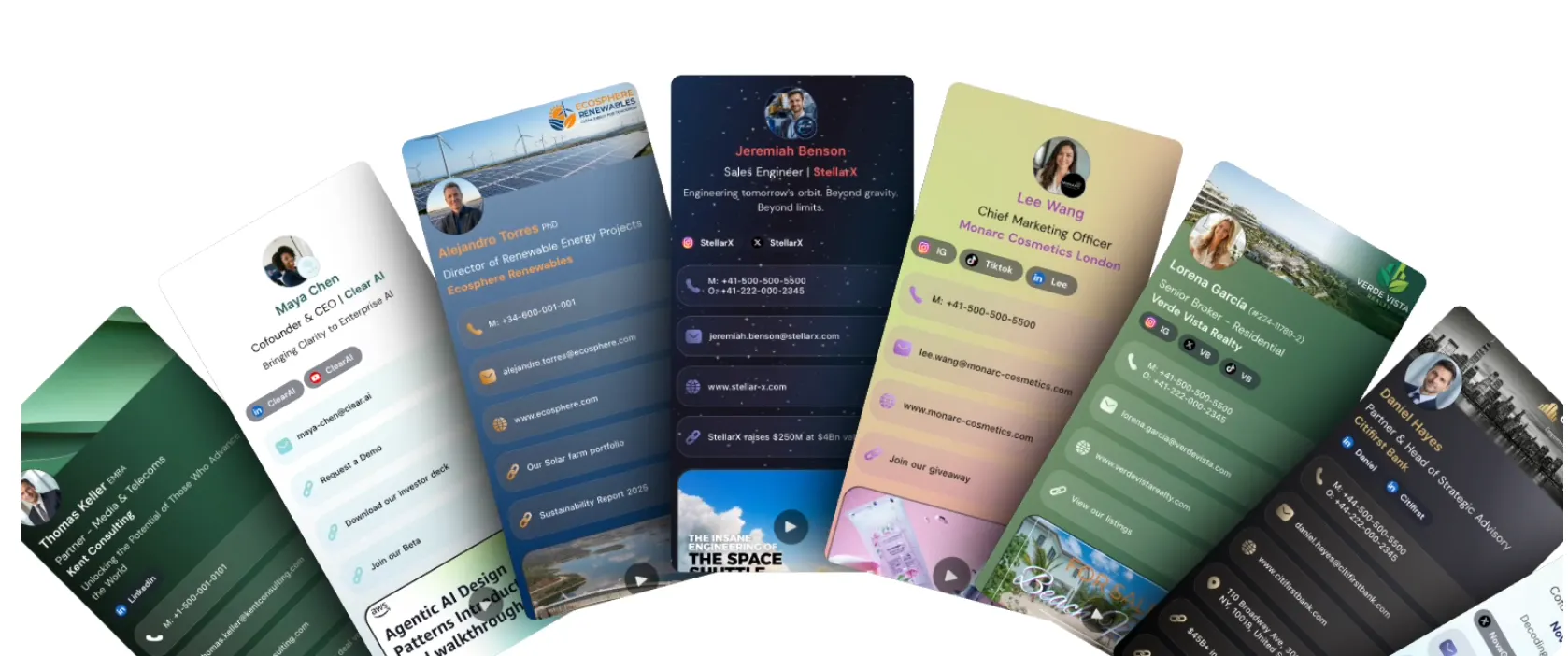
The fastest way to turn a networking conversation into a business outcome is to capture the contact, add context, and schedule a follow-up before you leave the room — or close the browser tab.
KADO makes that three-step process straightforward. First, create your digital business card with your full contact details, social links, and a meeting link. Second, share it at your next event via QR code or NFC tap — no app required for the recipient. Third, sync captured contacts directly to your CRM and add a follow-up reminder in KADO’s contact manager.
For teams attending conferences or trade shows, KADO’s event ROI tracking shows exactly which contacts converted to meetings and pipeline — so you can measure the return on every event you attend. Start with a free account and have your card ready before your next networking opportunity.
Further reading and sources
- Building Connections Through Digital Networking — SUCCESS: Covers platform scale and practical tactics for professional visibility online.
- Top Five Reasons to Network in a Digital World — NCHEC: Accessible overview of the core reasons professionals should prioritize digital networking.
- Workflow for Managing Digital Contacts — KADO: Step-by-step guide to organizing contacts and building a repeatable follow-up system.
Frequently Asked Questions
Why is digital networking important for professionals?
Digital networking expands your reach beyond your immediate geography, makes your professional identity searchable, and creates documented conversations you can act on — all of which accelerate career and business growth compared to relying solely on in-person events.
What are the main benefits of online networking?
The core advantages include amplified visibility through content and profiles, faster opportunity discovery through communities and algorithms, scalable relationship management, and measurable follow-up that in-person networking rarely produces.
How long does it take for digital networking to produce results?
Expect six months to a year of consistent effort before meaningful business opportunities emerge. Relationship-building online follows the same trust timeline as in-person networking — it just scales faster once momentum builds.
What are the four key advantages of networking online?
The four most cited advantages are: geographic reach (connect with anyone, anywhere), lower cost and time barriers compared to in-person events, documented conversations that improve follow-up, and inbound opportunities generated through content and community participation.
How does KADO help with digital networking follow-up?
KADO captures contacts via QR code or NFC at the moment of connection, lets you add notes and tags immediately, and syncs to CRMs like Salesforce and HubSpot — so follow-up is scheduled and tracked rather than forgotten.