Zurück zur Beitragsliste
Benefits of Contactless Networking for Professionals
Zuletzt geändert: June 4, 2026


Contactless networking enhances efficiency by enabling instant, secure data exchange that integrates directly with CRMs. Digital profiles are updateable, reduce waste, and provide measurable analytics to prioritize follow-up efforts effectively. Combining NFC with QR codes ensures universal device compatibility, making it a secure and sustainable upgrade over paper business cards.
Contactless networking is defined as the exchange of professional contact information using NFC technology, QR codes, or digital links without physical card handoffs or manual data entry. The benefits of contactless networking are measurable: organizations using NFC digital business cards report 50% higher networking efficiency, 30% higher follow-up rates, and 63% improved lead management when contacts sync directly to CRM platforms. Traditional paper cards carry an 88% discard rate within a week. That single statistic explains why professionals across sales, recruiting, real estate, and enterprise teams are replacing paper with digital profiles they can update, track, and act on in real time.
What are the core benefits of contactless networking?
Speed is the most immediate advantage. NFC technology completes a contact exchange within seconds by tapping a card or device to a phone, with no swiping, typing, or app downloads required on the recipient’s end. That frictionless experience matters most in high-volume settings like trade shows, conferences, and sales calls, where every second of friction costs you a connection.

Beyond speed, the contactless communication benefits compound over time. A digital profile shared via NFC or QR code stays active indefinitely. You can update your title, phone number, or portfolio link without reprinting anything, and every person who received your card automatically sees the current version. This is a structural advantage paper cards cannot replicate.
The data integration layer is where contactless networking separates itself from every analog alternative. When a contact scans your digital card, that interaction can trigger an automatic CRM entry, a follow-up email sequence, or a tagged lead in your pipeline. Platforms like KADO connect NFC exchanges directly to tools like Salesforce, HubSpot, and Zoho, turning a tap into a tracked business relationship from the first moment of contact.
Here is a quick summary of the primary advantages:
- ✅ Speed: Contact exchange completes in seconds with no manual entry
- ✅ Retention: Digital cards are not discarded the way paper cards are
- ✅ Updateability: Profile changes reflect instantly without reissuing physical assets
- ✅ CRM sync: Contacts flow directly into your pipeline automatically
- ✅ Analytics: Profile views and click-throughs give you measurable networking ROI
Pro Tip: Always design your digital profile with a QR code fallback. Not all phones support NFC consistently across venues, and a QR code ensures you never lose a connection due to device incompatibility.
What security and health benefits does contactless networking provide?
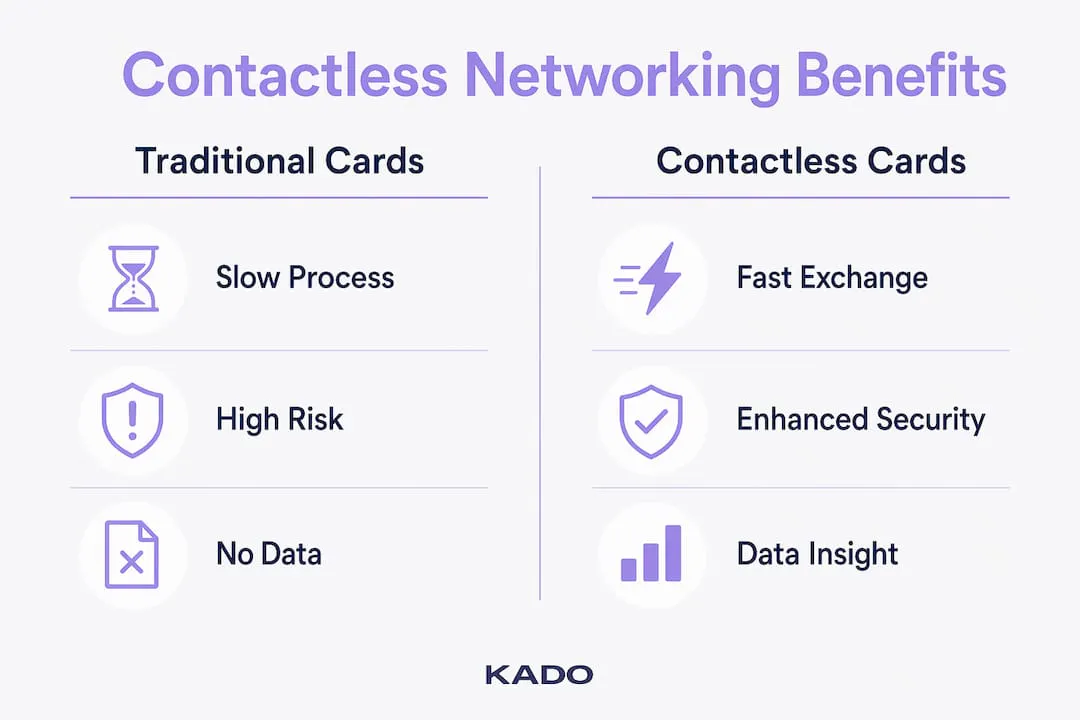
The security benefits of contactless exchanges go deeper than most professionals realize. Every NFC interaction generates a one-time encrypted token that replaces raw contact data during transmission. This tokenization model means your actual information is never exposed in transit, which eliminates the skimming and interception risks that come with physical card exchanges or unsecured email threads.
From a health standpoint, contactless exchanges reduce touch surfaces by keeping devices in the owner’s hand throughout the interaction. Post-pandemic professional culture has made hygiene awareness a permanent fixture in event environments, and contactless tools align naturally with that expectation. Attendees at conferences and networking events increasingly prefer tap-or-scan exchanges over handoffs.
The table below compares the security and health profile of traditional versus contactless networking methods:
| Factor | Traditional paper cards | Contactless digital cards |
|---|---|---|
Data exposure risk | High (printed data visible to anyone) | Low (encrypted tokenization per exchange) |
Skimming vulnerability | Moderate (data can be photographed or copied) | Minimal (one-time codes protect raw data) |
Physical touch required | Yes (card changes hands) | No (tap or scan from distance) |
Profile update security | None (static printed data) | Controlled (owner updates hosted profile) |
Germ transmission risk | Present (shared physical object) | Eliminated (device stays with owner) |
One underrated tactic: communicate these security features to your contacts before or during the exchange. Professionals who understand that your digital card uses encrypted data transfer are significantly more likely to scan and save it. Trust accelerates adoption, and adoption drives the follow-up rates that make networking worthwhile.
How does contactless networking improve lead tracking and CRM integration?
The most measurable impact of contactless networking sits in the follow-up layer. Organizations that link digital card exchanges to CRM platforms report 63% improved lead management, which translates directly to more closed deals, stronger pipelines, and better visibility into which networking activities actually generate revenue. That is not a marginal improvement. It is the difference between networking as a habit and networking as a growth strategy.
Digital profiles shared via NFC or QR codes generate data that paper cards never could. Every scan produces a timestamp, a location tag, and a profile view count. Click-throughs on embedded links tell you which contacts engaged with your portfolio, your LinkedIn, or your calendar booking page. Measurable networking metrics like these turn casual event contacts into a managed pipeline with clear conversion signals.
The workflow integration is where platforms like KADO deliver the most practical value. A contact scans your NFC card at an event. Their name, email, and company auto-populate in your CRM. A follow-up email triggers within 24 hours. You receive a notification when they click the link in that email. That entire sequence runs without manual input, which means your attention stays on building the relationship rather than managing the data.
| Metric | Traditional networking | Contactless networking |
|---|---|---|
Follow-up rate | Low (manual, often forgotten) | 30% higher with digital tools |
Lead management efficiency | Dependent on manual CRM entry | 63% improvement with NFC-CRM sync |
Contact discard rate | 88% within one week | Significantly lower with digital retention |
Profile view analytics | Not available | Available per exchange |
Automated follow-up | Requires manual setup each time | Triggered automatically on scan |
For sales teams and recruiters specifically, this data layer changes how you prioritize outreach. Instead of following up with every contact equally, you follow up first with the ones who viewed your profile three times and clicked your calendar link. That kind of signal-based prioritization is only possible when your networking tool captures and surfaces behavioral data.
Pro Tip: Use contact capture forms embedded in your digital profile to collect context from new contacts at the moment of exchange. A simple field asking “What brought you here today?” gives you a personalization hook for every follow-up message.
What are the practical limits of contactless networking technology?
Contactless networking is not without constraints, and understanding them helps you design a setup that works in every environment. NFC requires proximity, typically within a few centimeters, and not all venues or devices support it consistently. Older Android devices and some corporate-issued iPhones with restricted NFC permissions can block tap-to-connect functionality entirely.
The fix is straightforward: always pair your NFC card with a QR code on the same physical card or profile page. QR codes work on any smartphone camera without an app, which means your fallback covers nearly 100% of devices. Platforms like KADO build both delivery methods into every card by default, so you are never dependent on a single technology working perfectly in a given room.
Sustainability is a practical benefit that often gets overlooked in the speed-and-efficiency conversation. Updating a hosted digital profile eliminates the need to reprint cards every time your role, number, or company changes. For enterprise teams with hundreds of employees, that reduction in print volume is both a cost saving and a measurable environmental contribution.
Here are the key practical considerations to address before deploying contactless networking tools:
- ⚠️ NFC compatibility: Confirm your card works with both iOS and Android before your next event
- ⚠️ Venue interference: Metal surfaces and certain badge holders can block NFC signals; test your setup in advance
- ⚠️ Profile completeness: An incomplete digital profile loses the advantage of the exchange; fill every field before sharing
- ⚠️ CRM connection: The efficiency gains only materialize if your digital card is actively synced to your contact management system
- ✅ QR fallback: Always include a scannable QR code as a secondary sharing method for universal compatibility
The advantages of wireless networking technology compound when you treat your digital profile as a living document rather than a static replacement for a paper card. Update it before every major event, add new portfolio pieces as they are completed, and review your analytics monthly to understand which exchanges are generating real pipeline activity.
Key takeaways
Contactless networking delivers measurable advantages in speed, security, and lead management that paper-based methods cannot match, making it the most practical upgrade available to professionals who network regularly.
| Point | Details |
|---|---|
Speed and retention | NFC exchanges complete in seconds and eliminate the 88% discard rate of paper cards. |
Security through tokenization | Encrypted one-time codes protect contact data during every NFC exchange. |
CRM-driven follow-up | Linking digital cards to CRM platforms produces 63% better lead management outcomes. |
QR fallback is non-negotiable | Always pair NFC with a QR code to cover devices and venues where NFC fails. |
Analytics enable prioritization | Profile view data and click-throughs let you follow up with the most engaged contacts first. |
Why contactless networking is more than a convenience upgrade
We have tested and built contactless networking tools long enough to say this clearly: the professionals who get the most from this technology are not the ones who adopt it for the novelty. They are the ones who treat their digital profile as a core part of their professional identity and keep it current.
The real shift contactless networking creates is not in the exchange itself. It is in what happens after. When a tap automatically populates a CRM record and triggers a follow-up sequence, you stop losing connections to the chaos of post-event inboxes. Networking evolves from a transactional activity into a system that builds durable relationships over time.
We also think the sustainability angle deserves more attention than it typically gets. Every NFC card that replaces a box of paper cards is a concrete reduction in waste, and for enterprise teams, that adds up to thousands of cards per year. That is a talking point worth sharing with procurement and sustainability teams when making the case for adoption.
The professionals we see getting the best results combine NFC cards with active CRM integration, a complete and regularly updated digital profile, and a habit of reviewing their exchange analytics after every major event. Small efficiency gains in networking compound into significant business growth over a year or two. The technology makes that compounding possible. The habit makes it real.
Build your contactless networking system with KADO
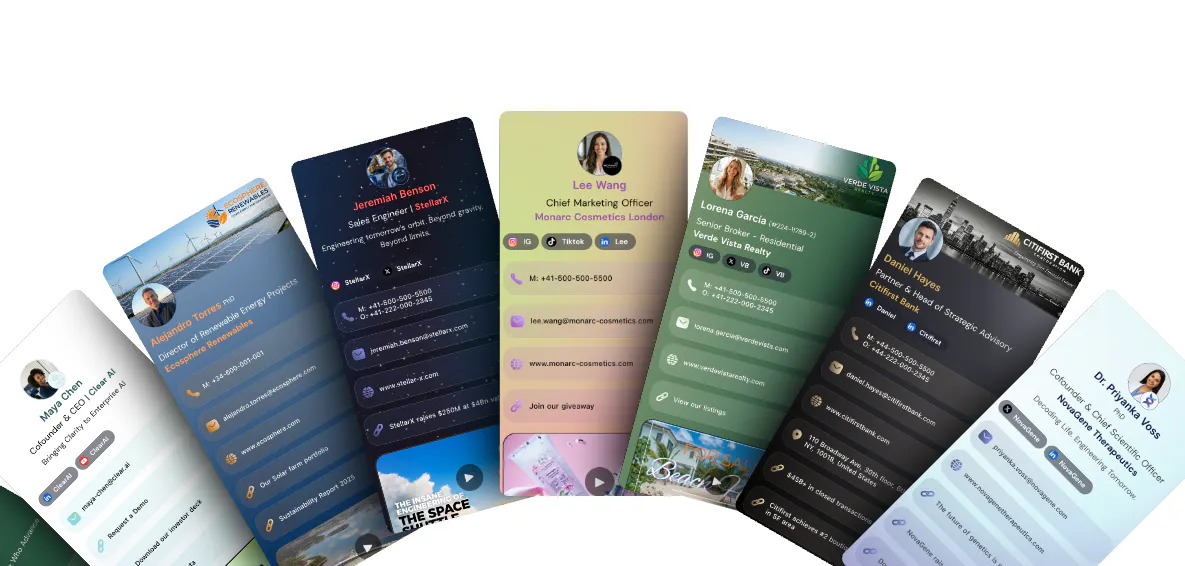
KADO gives you everything you need to put contactless networking to work immediately. Design and share NFC-enabled digital business cards that sync directly to your CRM, capture leads at events with embedded contact forms, and track every exchange with profile analytics. Free customizable options are available for individual professionals, with scalable team and enterprise plans that include role-based access and branded card management. Whether you are a solo recruiter or running a sales team of 200, KADO connects your contact capture and follow-up workflow into one place so no connection gets lost after the event ends.
Häufig gestellte Fragen
What is contactless networking?
Contactless networking is the exchange of professional contact information using NFC technology, QR codes, or digital links without physical card handoffs. It enables instant, touch-free sharing that connects directly to CRM platforms and follow-up workflows.
How does NFC work in professional networking?
NFC allows two devices to exchange data when held within a few centimeters of each other, completing a contact transfer in seconds. The recipient receives a digital profile link without needing an app, and the sender’s CRM can log the exchange automatically.
Is contactless networking secure?
Yes. Tokenization protects contact data by generating a unique encrypted code for each exchange rather than transmitting raw information. This eliminates the skimming and interception risks associated with printed cards or unsecured email exchanges.
What happens if someone’s phone doesn’t support NFC?
A QR code fallback solves this completely. QR codes work on any smartphone camera without an app, covering devices and venues where NFC is unavailable or restricted. KADO includes both delivery methods on every digital card by default.