Go back to list of posts
What Is Green Networking? A Professional's 2026 Guide
Last modified: July 15, 2026


Green networking is the practice of designing, operating, and managing communication networks to minimize energy consumption and carbon emissions while maintaining full performance. The internet accounts for approximately 3% of global emissions, a figure that grows as data traffic increases. For professionals and entrepreneurs who care about sustainability, understanding green networking is the first step toward making smarter, more responsible technology decisions. RFC 9845, published by the Internet Engineering Task Force, now formally defines green networking management as a discipline that treats carbon footprint and renewable energy use as core operational metrics alongside speed and uptime.
What is green networking and why does it matter?
Green networking is defined by RFC 9845 as the integration of energy efficiency, carbon footprint reduction, and sustainable resource management into every layer of network design and operation. The standard marks a shift in how the industry measures network performance. Speed and uptime are no longer the only metrics that matter. Carbon intensity and energy source now sit alongside them as first-class operational criteria.
The environmental stakes are real. Network hardware runs continuously, and idle equipment still draws significant power. Traditional network management ignored this waste entirely. Green networking addresses it directly by building sustainability into hardware design, routing decisions, and operational policies from the ground up.
This is not a niche concern for large telecoms. Any business that runs a corporate network, attends industry events, or relies on digital infrastructure contributes to this footprint. Professionals who adopt eco-friendly networking practices reduce costs, meet growing regulatory expectations, and strengthen their brand with clients who prioritize sustainability.
How does green networking reduce environmental impact?
The most direct path to greener networks runs through hardware design and routing strategy. Both areas offer measurable gains without sacrificing performance.
Energy-efficient hardware design
Network equipment cooling fans consume 10–15% of total device power under normal conditions, rising to 30% at high temperatures. That single component represents a significant target for efficiency gains. Cisco’s C9350 switch addresses this through strategic component placement and airflow optimization, achieving a 23% improvement in cooling efficiency. The redesign also removed plastic air baffles and introduced modular components, reducing both material waste and power draw.
Circular design takes this further by planning for the full hardware lifecycle at the engineering stage. Components are designed to be refurbished or reused rather than discarded. This approach reduces supply chain emissions and lowers the total environmental cost of a device over its lifetime. Circular design at scale achieves cost neutrality while delivering broader sustainability gains, proving that environmental responsibility and product performance are compatible goals.
Carbon-aware routing strategies
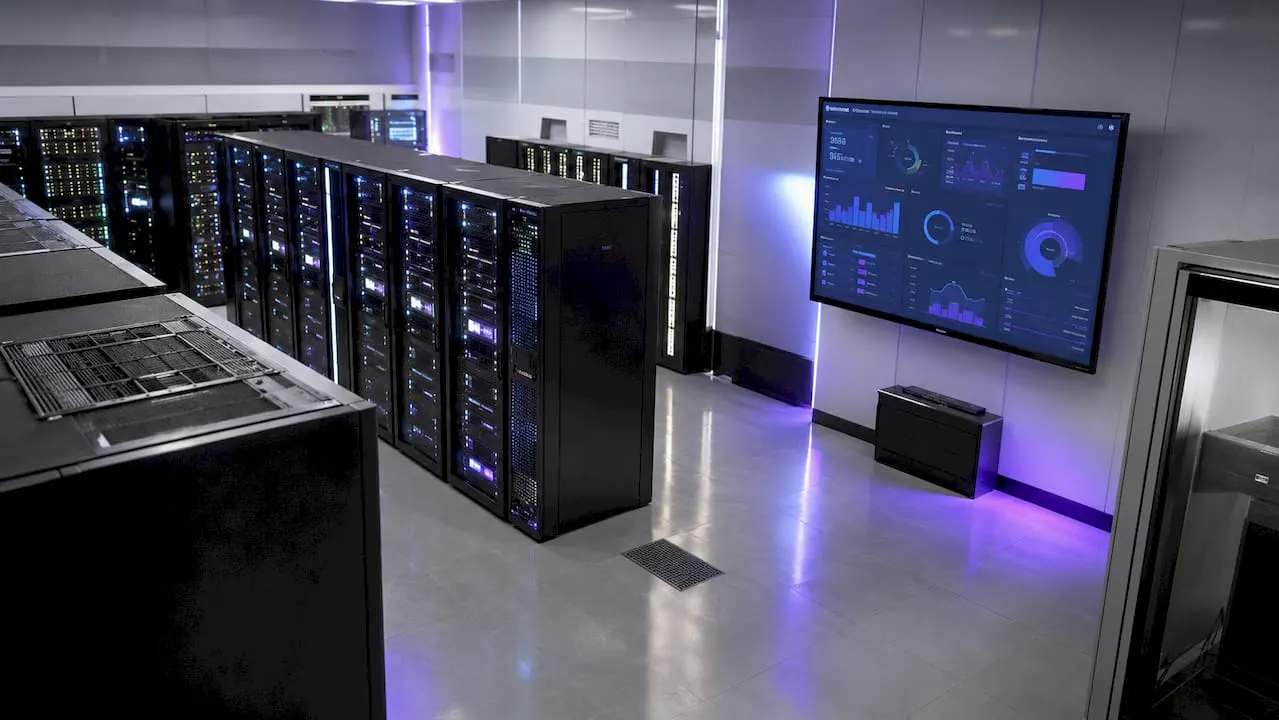
Traditional routing prioritizes the lowest latency path, regardless of the carbon intensity of the energy powering that path. Carbon-aware routing changes this by dynamically adjusting link weights based on real-time carbon intensity and network congestion data. The result is a meaningful reduction in emissions with only modest latency trade-offs.
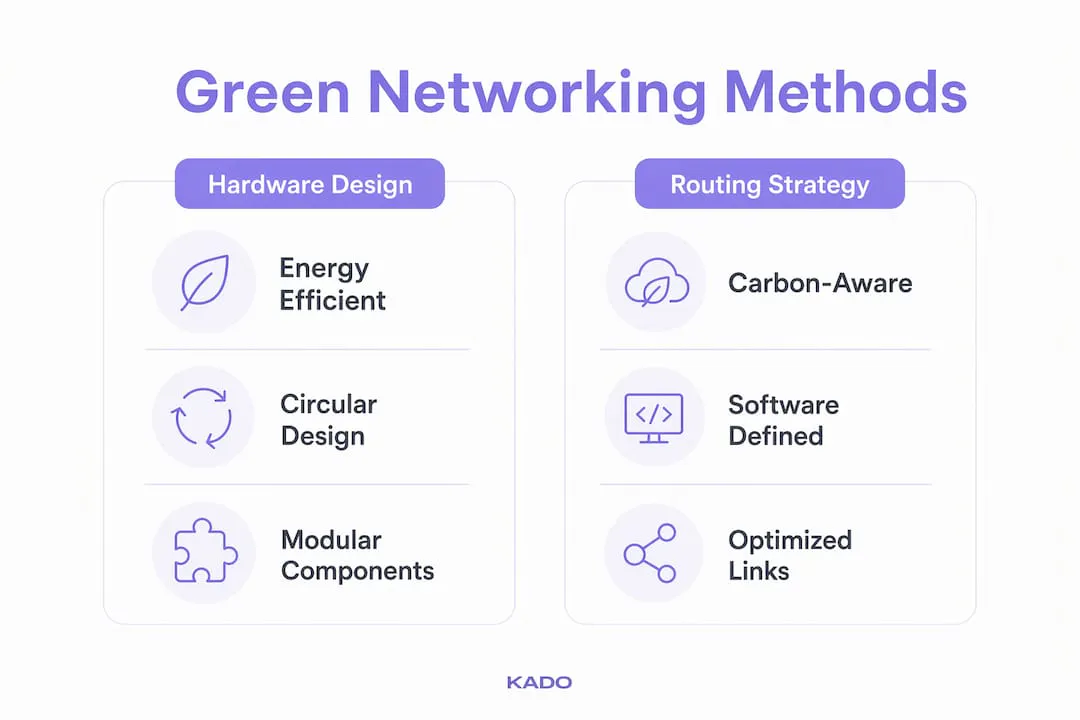
The ECOWN framework takes this concept further using software-defined networking and integer linear programming. By optimizing routing and link activation against real-time traffic and power models, ECOWN reduces carbon emissions by up to 59% in wired networks. That figure demonstrates what is possible when sustainability is treated as a design constraint rather than an afterthought.
| Method | Mechanism | Environmental Benefit |
|---|---|---|
Circular hardware design | Modular, reusable components | Reduces material waste and supply chain emissions |
Airflow optimization | Strategic component placement | Up to 23% cooling efficiency gain |
Carbon-aware routing | Dynamic link weight adjustment | Significant emissions reduction with low latency impact |
ECOWN SDN framework | ILP-based routing and link activation | Up to 59% carbon reduction in wired networks |
Pro Tip: When evaluating new network hardware, ask vendors for lifecycle assessment data and energy consumption figures at both idle and peak load. These numbers reveal the true environmental cost of a device far better than marketing claims.
How does network management improve sustainability?
Hardware and routing improvements set the foundation. Operational management determines how much of that potential is actually realized day to day.
The core principle is simple: networks should consume power in proportion to the traffic they carry. Most enterprise networks are sized for peak demand but run at a fraction of capacity for the majority of the day. That gap represents direct energy waste. Green network management closes it through a set of proven operational practices.
Recommended management practices for sustainable networking:
- Dynamic power scaling: Power down unused ports, line cards, and access points during low-traffic periods. Many enterprise switches support this natively through energy-efficient Ethernet standards.
- Traffic shaping and peak demand shaving: Schedule non-urgent data transfers, backups, and software updates during off-peak hours to flatten demand curves and reduce the need for always-on high-capacity links.
- Carbon-aware traffic engineering: Route traffic through network segments powered by renewable energy when carbon intensity data is available, applying the same logic as carbon-aware routing at the operational level.
- Baseline energy auditing: Measure actual power consumption per device and per traffic unit before making changes. Accurate measurement is the prerequisite for any meaningful reduction strategy.
- Renewable energy integration: Align network infrastructure with renewable energy procurement, particularly for data centers and core routing equipment that run continuously.
Balancing resilience with energy savings is the central operational tension in green network management. Powering down redundant links saves energy but reduces fault tolerance. The right balance depends on your organization’s risk tolerance and traffic patterns. Most networks can safely reduce active capacity during off-peak windows without meaningful exposure.
Pro Tip: Start your green network management program with a 30-day energy audit using your existing network monitoring tools. Identify the five highest-consuming devices and their average utilization rates. You will almost always find significant idle power waste that can be addressed without any capital investment.
What are the challenges and opportunities in green networking adoption?
Green networking adoption is accelerating, but real obstacles remain. Understanding both sides helps professionals make informed decisions about where to invest and what to expect.
| Challenge | Opportunity |
|---|---|
Accurately measuring network carbon footprint | RFC 9845 provides a management framework for standardized measurement |
High upfront cost of energy-efficient hardware | Circular-as-a-Service models reduce capital requirements through leasing and refurbishment |
Balancing performance with energy reduction | Carbon-aware routing achieves both with acceptable trade-offs |
Fragmented industry standards and accountability | Dagstuhl seminar findings push for unified footprint accounting methods |
Supply chain emissions from hardware manufacturing | Network Zero initiative promotes certified refurbished and reused equipment |
The carbon footprint measurement problem is more significant than it appears. Accurately characterizing network emissions is a prerequisite for applying effective green strategies, yet most organizations lack the tools and data to do it well. Without a reliable baseline, it is impossible to know whether interventions are working.
The Network Zero initiative addresses the hardware cost barrier directly. By certifying refurbished and reused telecom equipment, it enables operators to build sustainable networks without the full capital cost of new devices. The Circular-as-a-Service model that accompanies it lets organizations lease infrastructure, return it for refurbishment, and replace it with updated equipment on a cycle that keeps hardware out of landfills.
The path forward runs through standards adoption. RFC 9845 gives network managers a concrete framework for incorporating sustainability metrics into existing management systems. Organizations that adopt it now build the measurement infrastructure needed to demonstrate progress to regulators, clients, and investors.
How does green networking apply to professional and entrepreneurial environments?
Green networking extends beyond IT infrastructure. For professionals and entrepreneurs, it also describes the practice of building business relationships in ways that minimize environmental impact. This is where eco-friendly networking practices connect directly to daily professional life.
The most visible example is the shift from paper business cards to digital alternatives. Paper cards generate waste at every stage: production, distribution, and disposal. A single conference can produce thousands of cards, most of which end up discarded within weeks. Digital networking tools eliminate this waste entirely while improving the quality of contact data captured.
Benefits of adopting green networking practices professionally:
- ✅ Reduced material waste: Digital contact sharing eliminates paper, printing, and shipping entirely.
- ✅ Lower carbon footprint per interaction: Sharing a digital profile via QR code or NFC produces a fraction of the emissions of printing and mailing physical cards.
- ✅ Better data quality: Digital contacts update in real time, so you never work from outdated information.
- ✅ Stronger brand alignment: Clients and partners who prioritize sustainability respond positively to professionals who practice it visibly.
- ✅ Measurable networking ROI: Digital tools track every contact exchange, follow-up, and conversion in ways paper cards never could.
Sustainability in business networking also influences how professionals choose events, partners, and platforms. Choosing virtual or hybrid events over purely in-person formats reduces travel emissions. Selecting vendors with documented sustainability commitments extends your own environmental standards through your supply chain. These choices compound over time and contribute to a measurable reduction in your professional carbon footprint.
KADO supports this shift by replacing paper business cards with digital profiles that share instantly via QR code, NFC, Apple Wallet, and Google Wallet. Every contact exchange through KADO eliminates a printed card and captures cleaner, more complete data for follow-up.
Key Takeaways
Green networking reduces environmental impact through hardware design, carbon-aware routing, operational management, and digital tools that replace physical materials across both IT infrastructure and professional networking practices.
| Point | Details |
|---|---|
RFC 9845 defines the standard | Carbon footprint and renewable energy use are now formal network management metrics. |
Hardware design drives big gains | Circular design and airflow optimization cut cooling power by up to 23%. |
Carbon-aware routing works | ECOWN framework reduces wired network emissions by up to 59% using SDN. |
Measurement comes first | Accurate carbon footprint data is required before any green strategy can be evaluated. |
Digital networking reduces waste | Replacing paper cards with digital tools eliminates material waste and improves contact data quality. |
Green networking is not optional anymore
We have watched sustainability move from a marketing talking point to a hard operational requirement, and green networking sits at the center of that shift. What strikes us most is how many organizations treat it as a future concern rather than a present one. The measurement infrastructure, the standards, and the hardware options all exist right now. The gap is almost always organizational will, not technical capability.
The professionals and entrepreneurs who adopt paperless networking practices today are not just reducing waste. They are building habits and systems that will be required by clients, regulators, and partners within the next few years. Starting now means you build the capability gradually rather than scrambling to catch up.
The most underrated insight from the Dagstuhl seminar findings is that carbon footprint measurement is itself a strategic asset. Organizations that can quantify their network emissions have a credible story to tell. Those that cannot are increasingly at a disadvantage in procurement, partnership, and investor conversations. Green networking is not just about doing less harm. It is about building the evidence that you are doing less harm.
— KADO
KADO and sustainable professional networking

Green networking principles apply directly to how you exchange contacts and manage relationships at events, conferences, and sales meetings.
KADO replaces paper business cards with digital profiles that share instantly through QR codes, NFC cards, Apple Wallet, and Google Wallet. Every exchange captures clean contact data, eliminates printed materials, and feeds directly into your CRM through integrations with Salesforce, HubSpot, and Microsoft Dynamics. For teams attending events, KADO’s event ROI tracking shows exactly which contacts converted and what revenue each networking interaction generated. For day-to-day contact management, KADO’s contact organization tools keep every follow-up on track without a single piece of paper.

Frequently Asked Questions
What is green networking in simple terms?
Green networking is the practice of designing and operating communication networks to use less energy and produce fewer carbon emissions. It applies to both IT infrastructure and professional networking habits like replacing paper cards with digital alternatives.
What does RFC 9845 say about green networking?
RFC 9845 defines green networking management as a framework that treats carbon footprint and renewable energy use as core network performance metrics alongside speed and uptime.
How much can carbon-aware routing reduce emissions?
The ECOWN framework reduces carbon emissions by up to 59% in wired networks by optimizing routing and link activation using real-time traffic and power data.
What is Circular-as-a-Service in green networking?
Circular-as-a-Service is a model where telecom operators lease certified refurbished network equipment, return it for refurbishment at end of life, and replace it with updated hardware, keeping devices out of landfills and reducing supply chain emissions.
How does digital business card use relate to green networking?
Replacing paper business cards with digital profiles eliminates printing and material waste at every contact exchange, reducing the environmental footprint of professional networking while improving data quality and follow-up efficiency.